
IPD management software. Admission to discharge, connected.
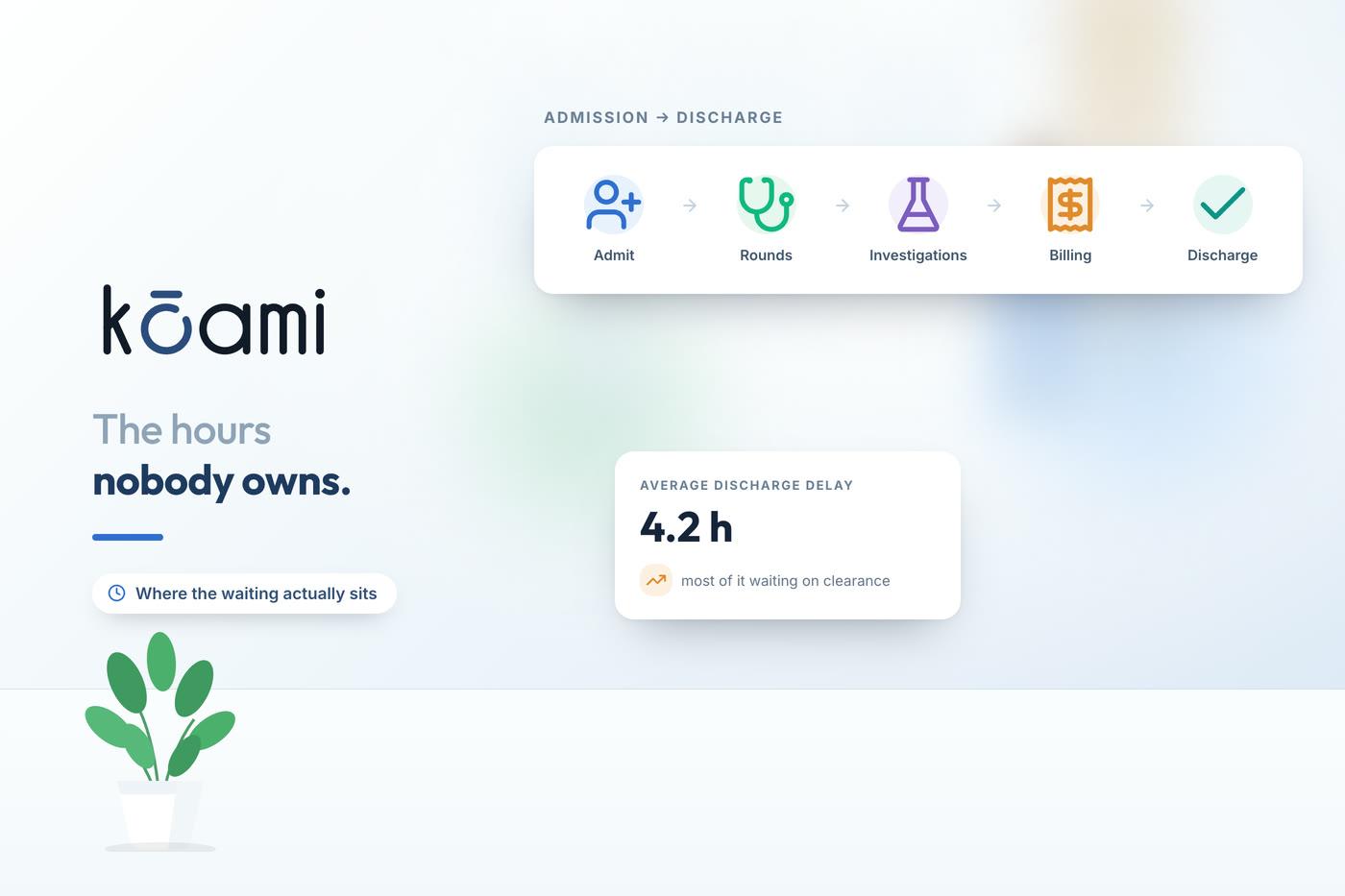
Inpatient care is where a hospital’s capacity is either created or consumed. A hospital that shortens its average length of stay by half a day has effectively built new beds — no construction, no equipment, no extra staff — and most of that time is not clinical. It is waiting.
IPD in Kōami is built around the movement of the patient rather than the paperwork about them: admission, bed, transfer and discharge are events on one record that pharmacy, billing, housekeeping and the wards all read from at the same moment.
What is IPD management software?
IPD management software runs a hospital’s inpatient care: admission and bed allocation, transfers between wards, the daily clinical and nursing record, orders to pharmacy, laboratory and imaging, and discharge with its summary and final bill. The ADT event stream it produces — admission, discharge, transfer — is what the rest of the hospital depends on to know where every patient is.
What the system has to do
Live beds and ADT
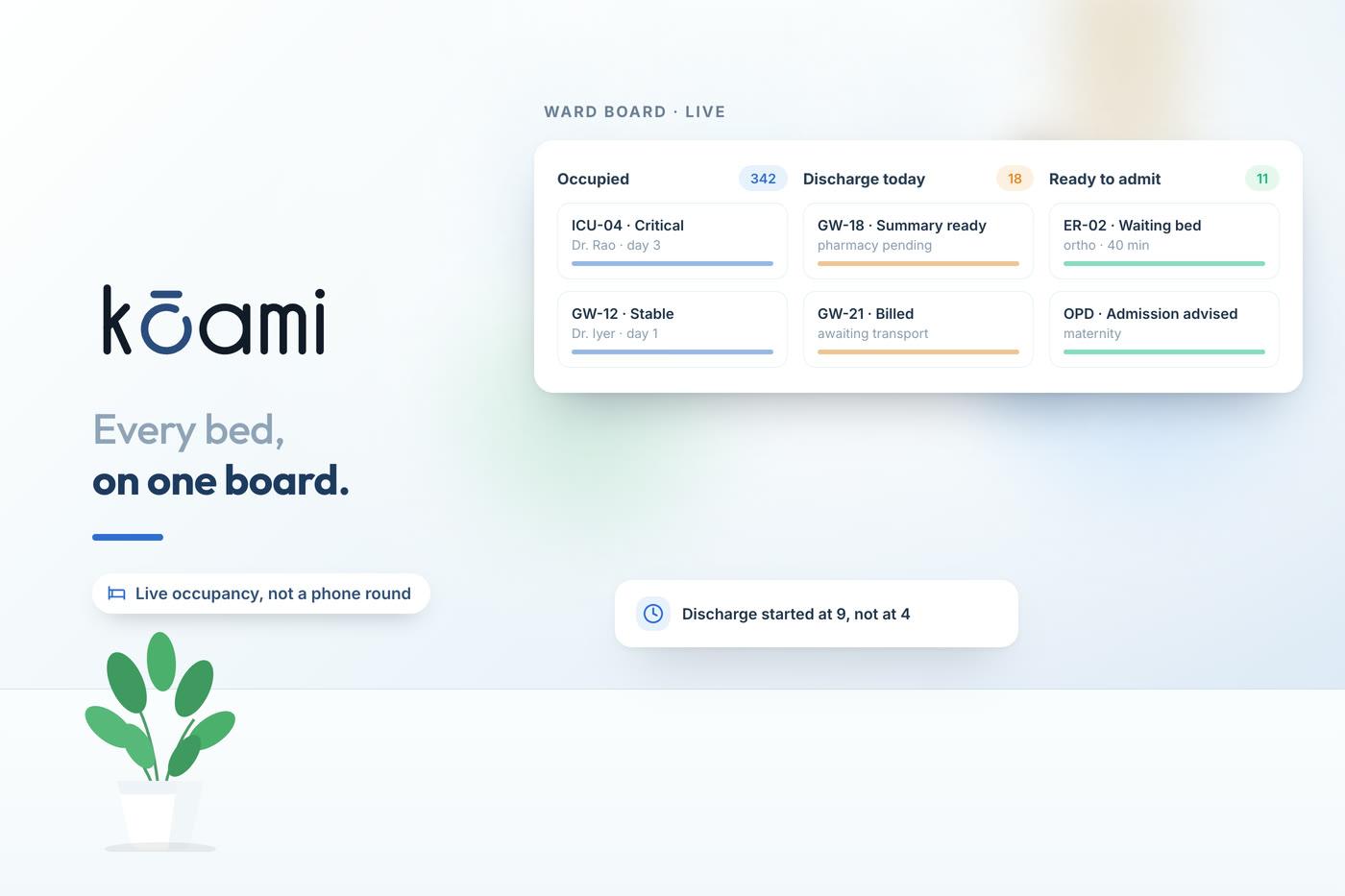
Ward and bed occupancy that updates as admissions, transfers and discharges happen, with a vacated bed raising its own cleaning task rather than waiting for a phone call.
Initiate Discharge on the round
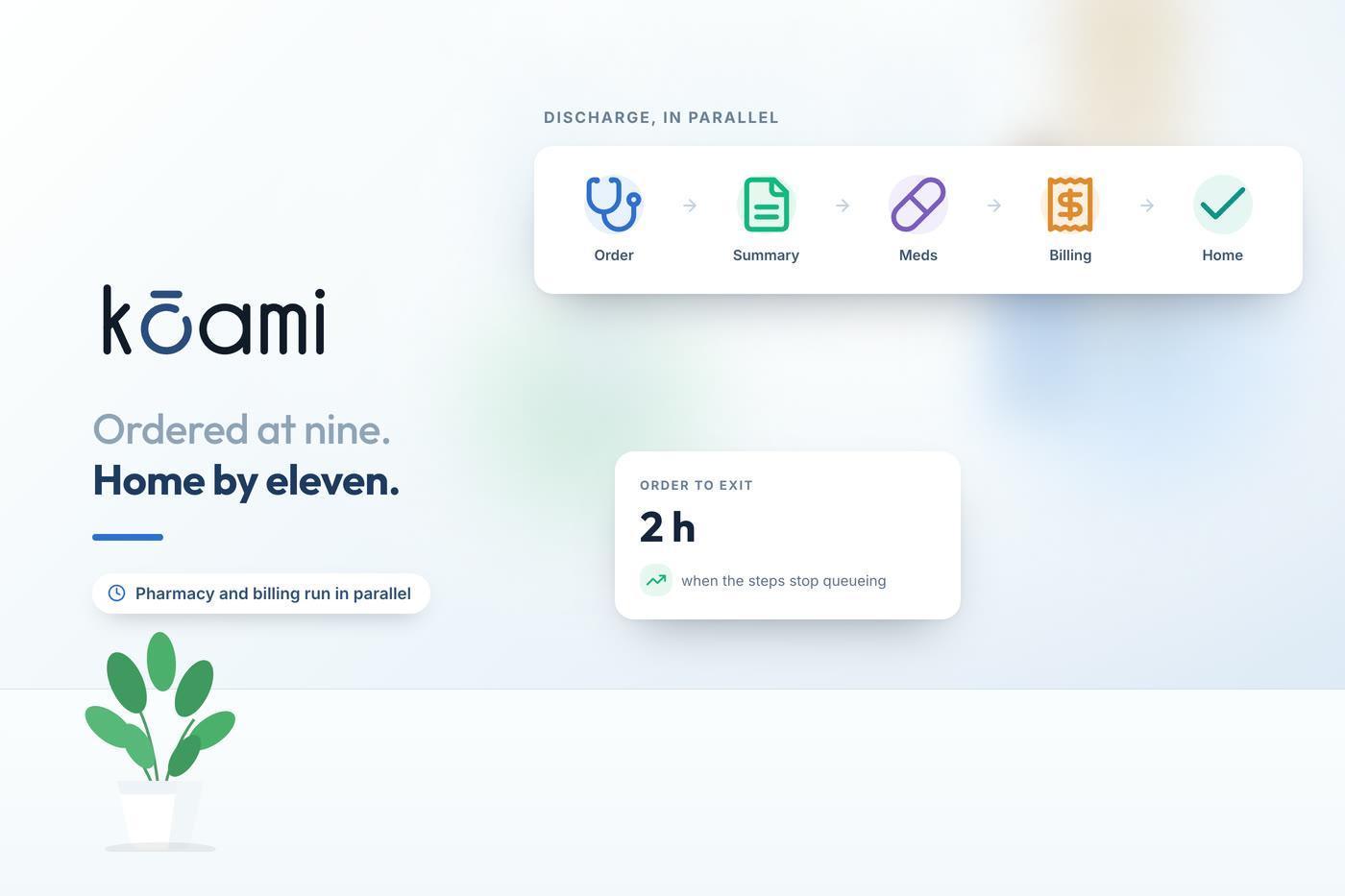
The consultant’s decision triggers pharmacy reconciliation, ward consumption confirmation, provisional billing and payer approval in parallel instead of one after another.
Nursing and bedside charting
Vitals, intake and output, medication administration, shift handover and clinical scores including MEWS, Braden and falls risk, recorded once at the bedside.
Orders from the chart
Lab, imaging and medication ordered in the record reach the laboratory, the modality worklist and the pharmacy, with status returning to the person who ordered.
Discharge summaries that build themselves
The summary accumulates from consultation and nursing notes through the stay, so it is reviewed at discharge rather than composed.
Care bundles and safety
VAP and CLABSI bundles and safe-surgery checklists inside the flow rather than on a separate form nobody fills.
What to test in an IPD demo
The interesting cases are the movements and the exceptions, not the admission itself.
- Admit a patient, transfer them between wards twice, and show the bed state after each move.
- Show which beds are free, which are occupied and which are awaiting housekeeping.
- Initiate discharge and show what fires simultaneously in pharmacy, billing and the ward.
- Return unused medicines and show the stock and the bill both reverse.
- Produce a discharge summary from notes recorded during the stay.
- Record vitals and show a MEWS score trending on a chart.
- Show every patient medically fit but not yet discharged, as a live list.
- Handle an admission for a patient who already exists as an outpatient.
How it connects
Kōami Hospital
IPD, beds and ADT sit inside the HMS on the same UMR as OPD, pharmacy, lab, imaging and billing.
Read moreHospital billing software
Charges accrue through the stay, so the discharge bill is read rather than assembled.
Read moreKōami Workforce
Ward rosters built against skill and ratio rules, so staffing matches the acuity actually on the floor.
Read moreGo deeper
Frequently asked questions
Walk one admission end to end
Bring a real stay — ideally one with a ward transfer, a package and an insurance approval — and we will run it from admission to final bill.
Book a demo