
NABH accreditation software. Evidence as a by-product.
Three weeks before an assessment, most hospitals change shape. A store room becomes a documentation cell, two staff nurses come off the floor, and a fortnight disappears into assembling evidence of work that was actually done months ago.
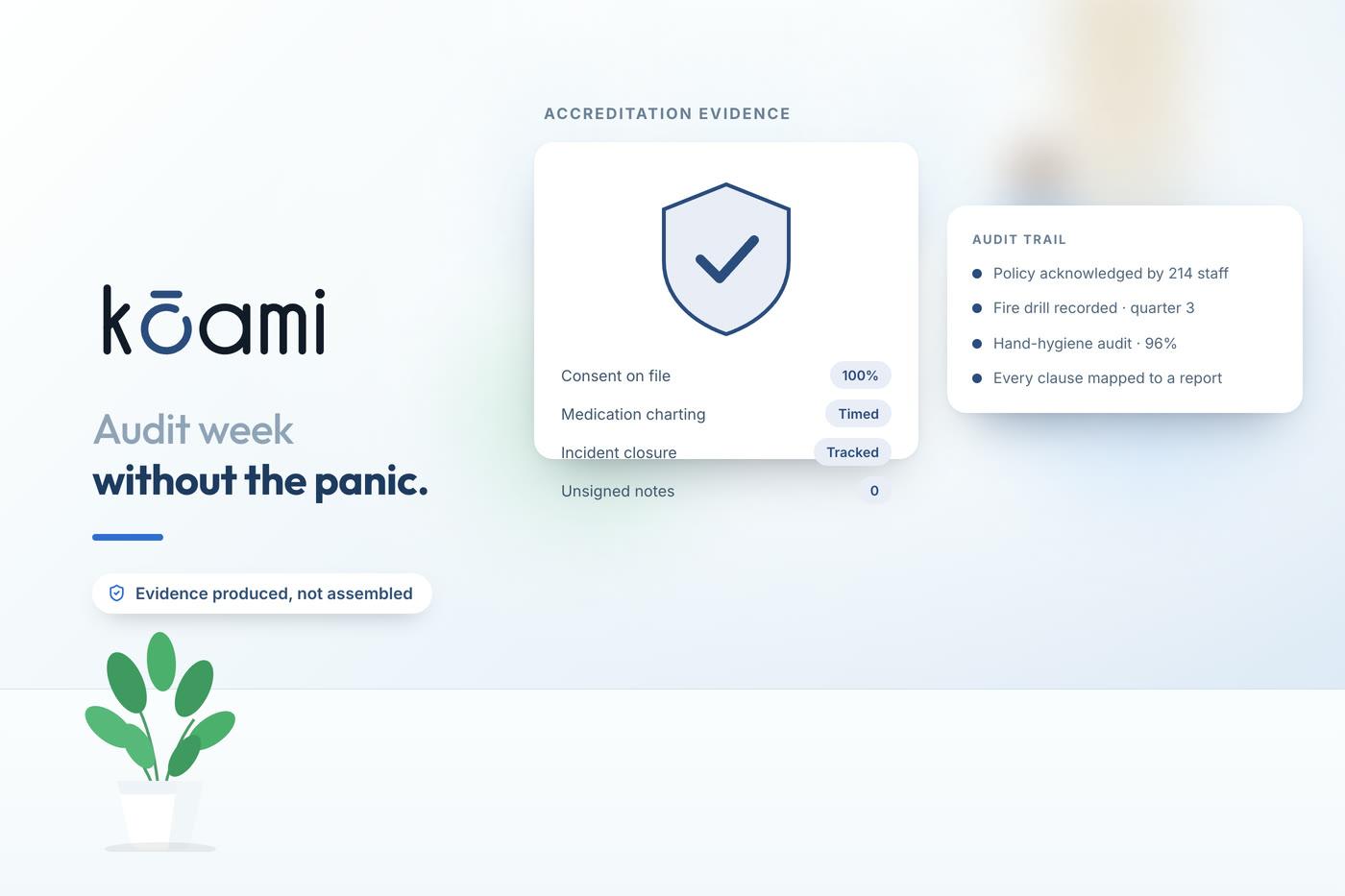
The scramble is itself the finding. Hospitals rarely fail NABH because the care was poor; they fail because the care cannot be shown. Software earns its place here by making the evidence a by-product of the work rather than a project before the audit.
What does NABH accreditation require from hospital software?
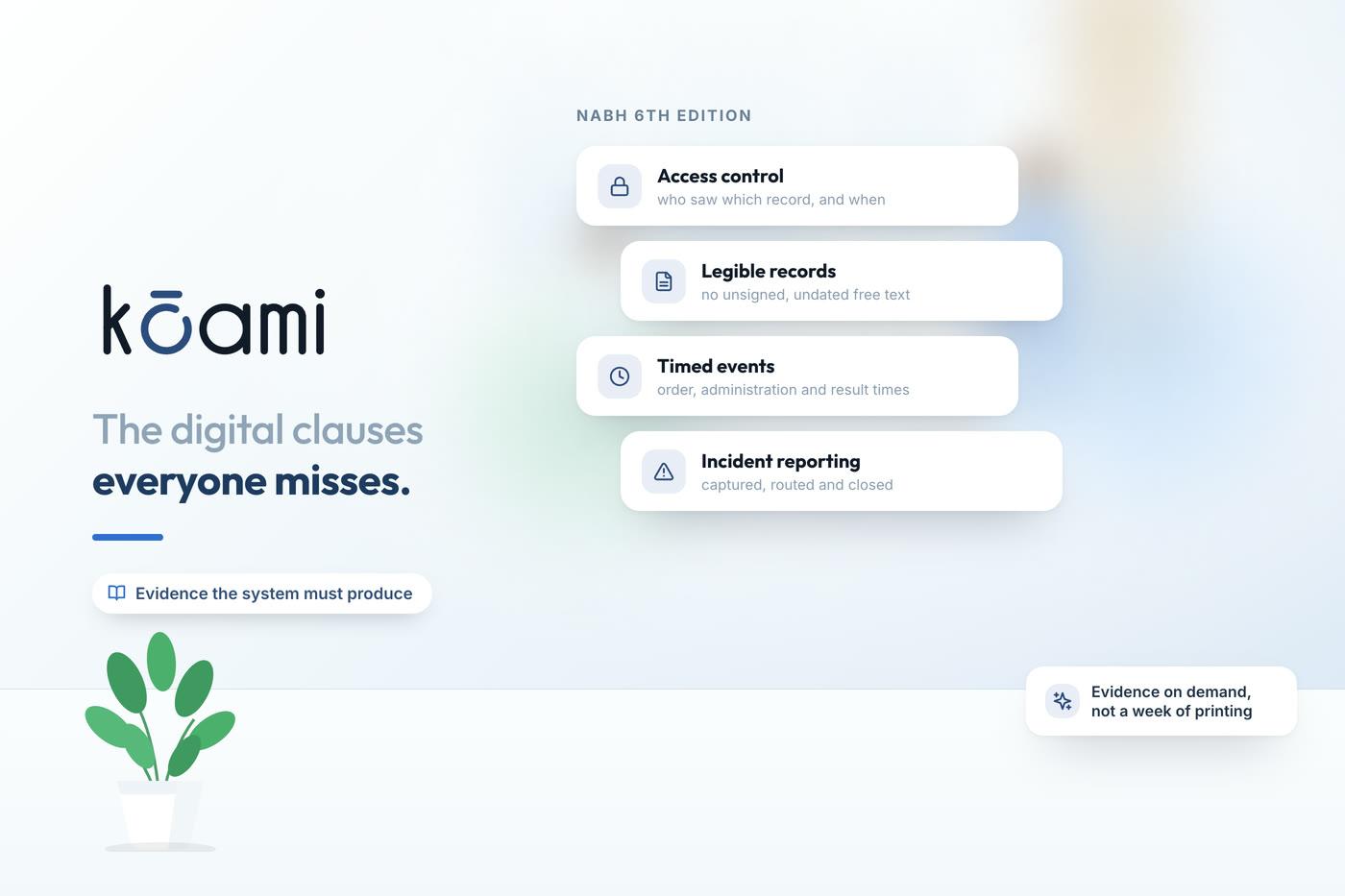
NABH expects demonstrable access control and audit trails, medical records that are complete and retrievable, quality indicators calculated from live data rather than compiled by hand, statutory registers, and evidence of equipment maintenance and calibration. The current edition is explicit about the digital clauses, which means a system that cannot show who viewed a record, or produce an indicator on demand, will cost the hospital at assessment.
What the system has to do
Access control and audit trails
Role-based access with every access logged, reads as well as writes, so "who saw this record and when" is a query rather than an investigation.
Complete, retrievable records
One longitudinal chart per patient across every encounter, with the discharge summary building from notes recorded during the stay rather than composed at the end.
Quality indicators from live data
Turnaround times, critical result acknowledgement, incident and reaction records, and clinical scores calculated from the transactions themselves.
Statutory registers
The NDPS register and other required registers generated from live transactions rather than maintained as a parallel book that has to be reconciled.
Equipment and calibration evidence
Preventive maintenance records, calibration certificates held against the asset and downtime reporting, produced for a named machine in seconds.
Safe-surgery and care bundles
Checklists and VAP and CLABSI bundles inside the clinical workflow, so completion is recorded against the case rather than filed on a form.
The requests an assessor actually makes
Run these against your current system before you run them against a vendor’s. The gaps are the shortlist.
- Show the audit trail for a record that was viewed but not edited.
- Produce the last four preventive maintenance records for a named ventilator.
- Show the current calibration certificate for a named instrument.
- Produce this quarter’s turnaround time indicator, with its denominator.
- Show that a critical result was acknowledged, by whom and when.
- Retrieve a complete medical record for a discharge eighteen months ago.
- Generate the NDPS register for last month from live transactions.
- List every staff credential that expired while the person was rostered.
How it connects
Kōami Hospital
Access control, audit trails, registers and the clinical record that most of the evidence comes from.
Read moreBiomedical equipment management software
PM schedules, calibration certificates and downtime — the section most often failed for want of evidence.
Read moreABDM compliant hospital software
Where the accreditation digital clauses and the national digital mission overlap.
Read moreGo deeper
Frequently asked questions
Run the assessor’s list
Take the eight requests above to your current system this week. Whatever takes more than a minute is what to bring to a demo.
Book a demo