
EMR software for hospitals. Structured, not a text box.
Almost every hospital system on the market claims an EMR. The word covers two very different things: a genuinely structured clinical record, and a rich-text editor with a spell-checker sitting inside a hospital system. The second demos beautifully and can be reported on by nobody.
The distinction decides what your hospital can do for the next decade. Analytics, clinical audit, quality indicators, ABDM record sharing and every AI capability worth having all depend on data a machine can read.
What is EMR software, and how is it different from an EHR?
An EMR is the clinical record held by one organisation: consultations, diagnoses, orders, results, prescriptions and discharge summaries, complete within your walls and stopping at them. An EHR is the longitudinal record designed to follow the patient across organisations, which in India is what ABDM is building. Every serious hospital system contains an EMR; almost none contains an EHR, because an EHR is a network you join rather than a product you buy.
What the system has to do
ICD-coded diagnoses
Diagnoses recorded as codes rather than prose, which is what makes clinical audit, case-mix analysis and scheme claims possible at all.
Structured orders
Lab, imaging and medication ordered from the chart as structured requests that reach the laboratory, the modality worklist and the pharmacy without re-entry.
Medication reconciliation
What the patient was on, what was prescribed and what was actually administered, held as one comparable record rather than three lists.
Nursing and bedside charting
Vitals, intake and output, administration records, shift handover and clinical scores including MEWS, Braden and falls risk, entered once at the bedside.
Cross-consultation
A referral to another speciality that lands in the same record, so the second opinion is part of the chart rather than a note in a file.
One longitudinal chart
Every encounter — outpatient, inpatient, theatre, emergency — on one UMR, so a consultant sees the patient rather than the visit.
How to tell a real EMR from a text box
One question settles most of it: can you report on what was entered? Ask for the report, not the screen.
- Record a diagnosis and then list every patient with that diagnosis this quarter.
- Order a test from the chart and show it arriving in the laboratory as a structured order.
- Show a result as a value that can be trended, not as a scanned page.
- Reconcile medications across admission, ward and discharge.
- Show the audit trail for a record that was viewed but not edited.
- Produce a patient’s complete record for a DPDP request.
- Link the encounter as an ABDM care context.
- Export the clinical data. Ask what format it comes out in.
How it connects
Kōami Hospital
The EMR is a module of the HMS, sharing the UMR with OPD, IPD, pharmacy, lab, imaging and billing.
Read moreABDM compliant hospital software
A structured record is what makes a linked ABDM care context useful to the next clinician.
Read moreIPD management software
Nursing charting and the discharge summary build from the same record through the stay.
Read moreGo deeper
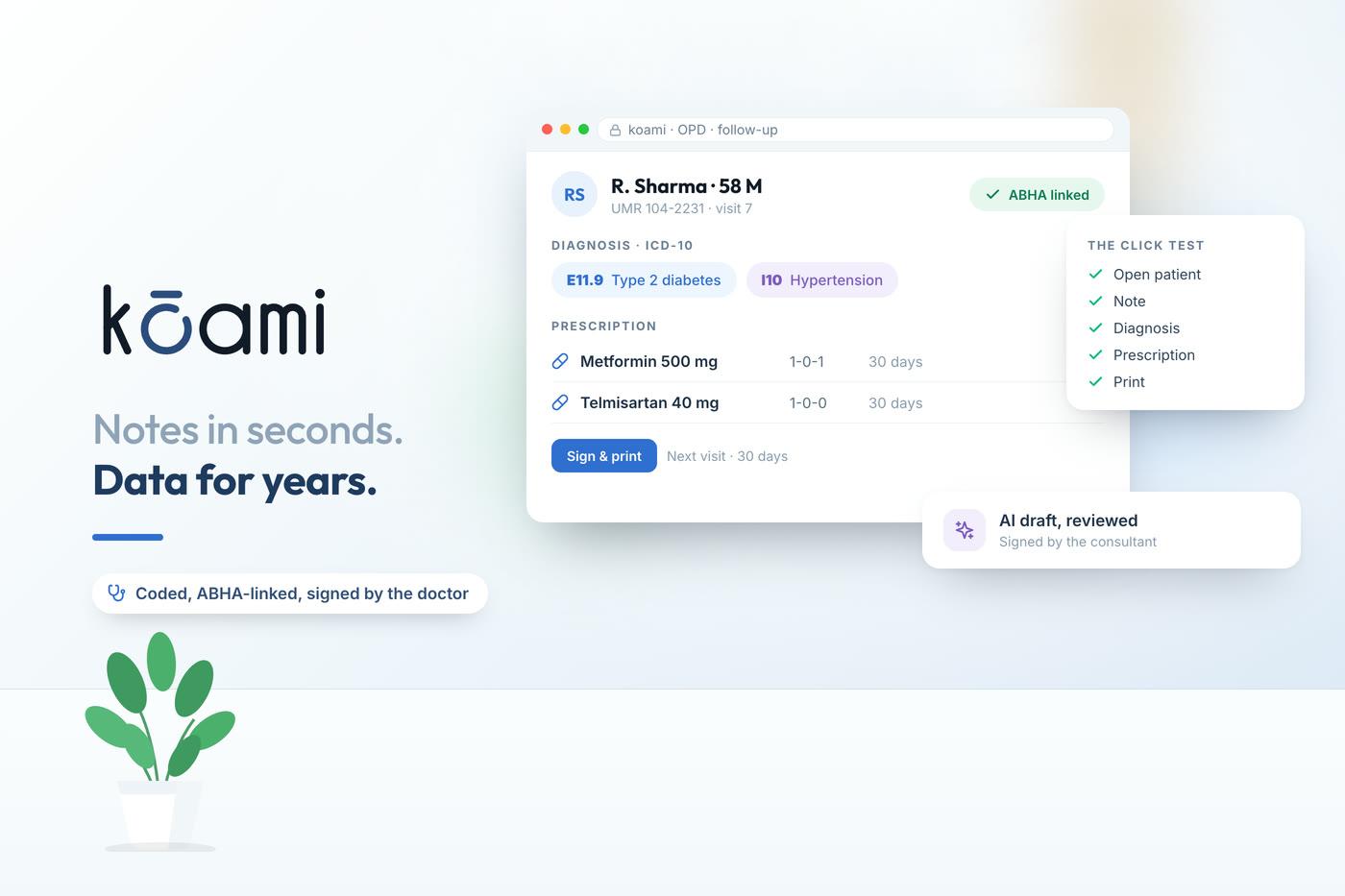 EMR software in India: how doctors and hospitals should choose one
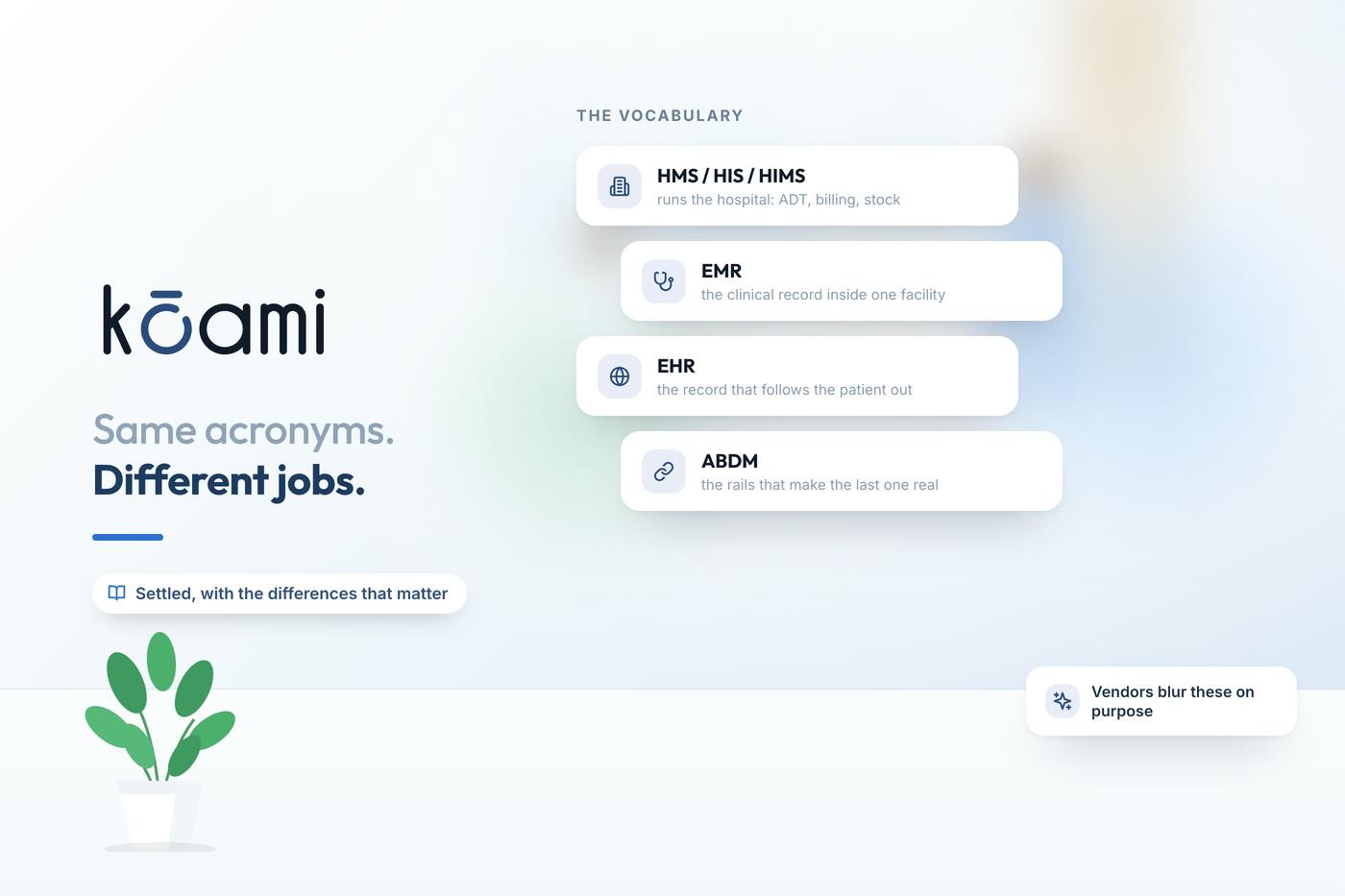 HMS, HIS, HIMS, EMR, EHR: the acronyms settled
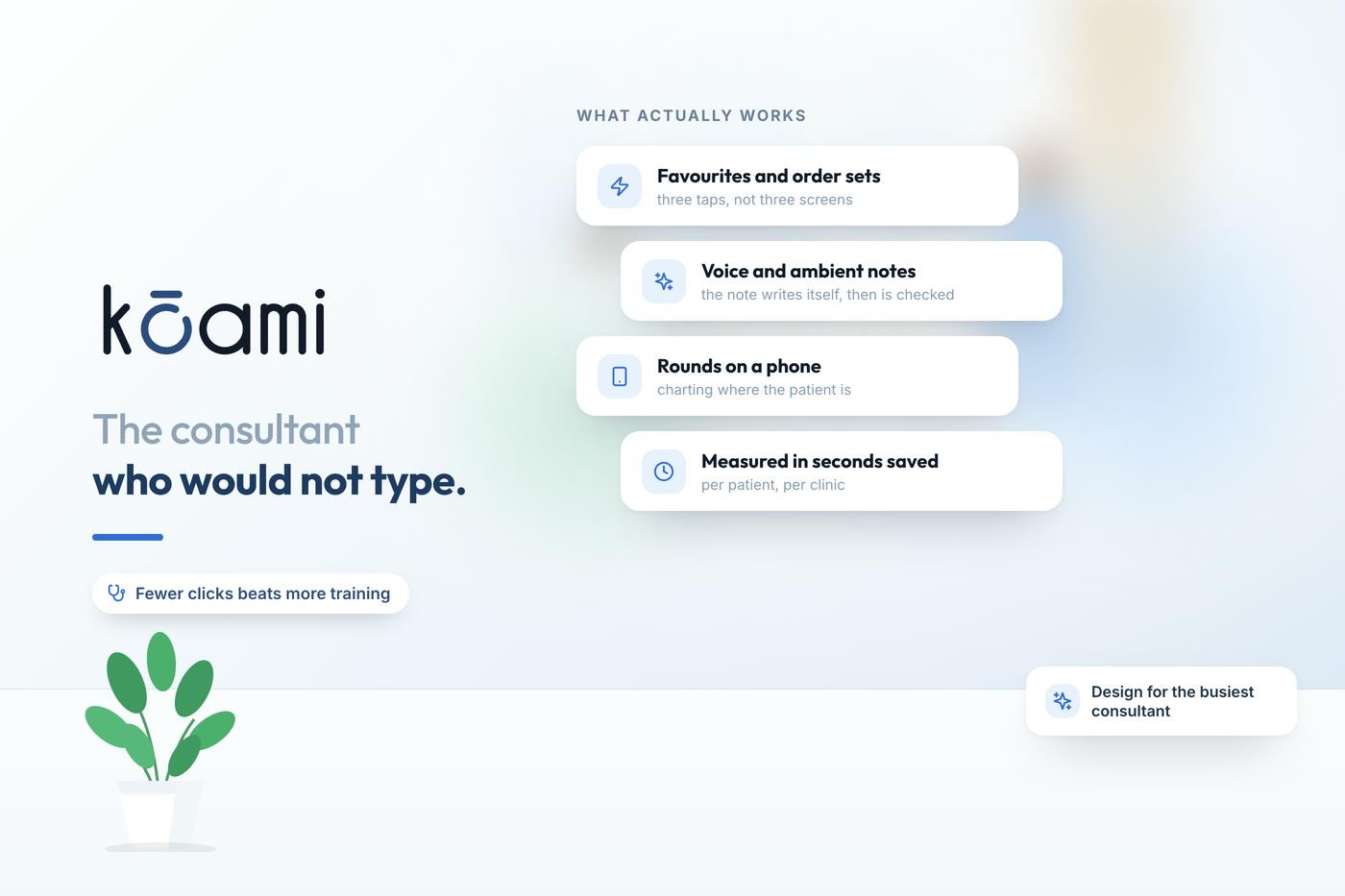 The consultant who would not type
- Securing patient data in cloud-based EMR systems
- What a good audit log actually records
- AI in hospital management software: what is real in 2026
- Cutting clinician typing with ambient notes
- AI medical scribe for doctors in India: what works in a busy OPD
- HL7 FHIR in India: what ABDM asks your software to speak
- Agentic AI in a hospital: where an agent may act
Frequently asked questions
Ask for the report, not the screen
Record three diagnoses in the demo, then ask the vendor to list every patient carrying one. That single request separates an EMR from an editor.
Book a demo