
Hospital billing software. Bills as care happens.
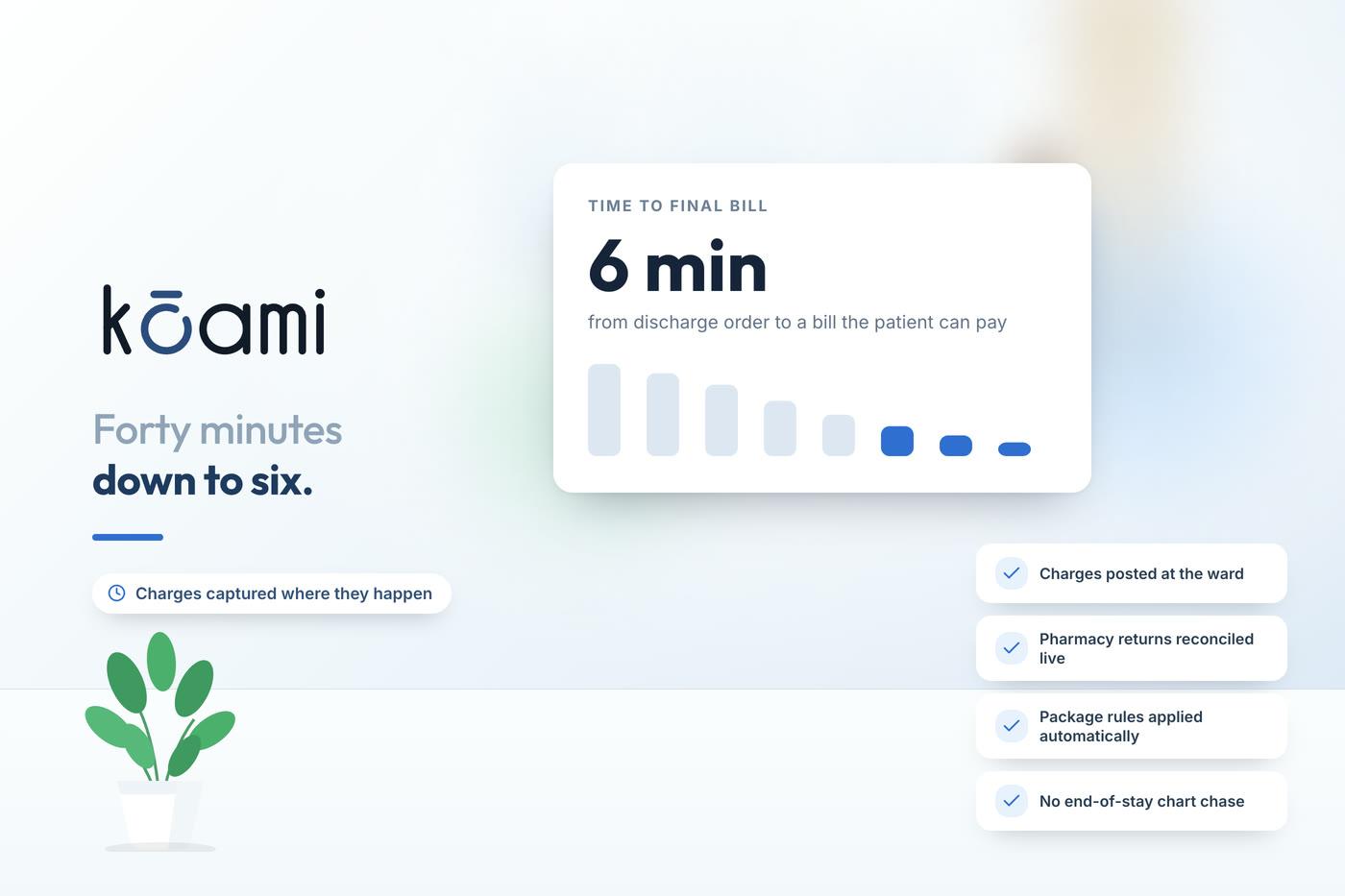
Hospital billing is slow in most hospitals for one reason: the charges are recorded after the care happened, so the bill has to be assembled at discharge rather than simply read. The clerk is not typing slowly. They are waiting for six departments to post what they already did.
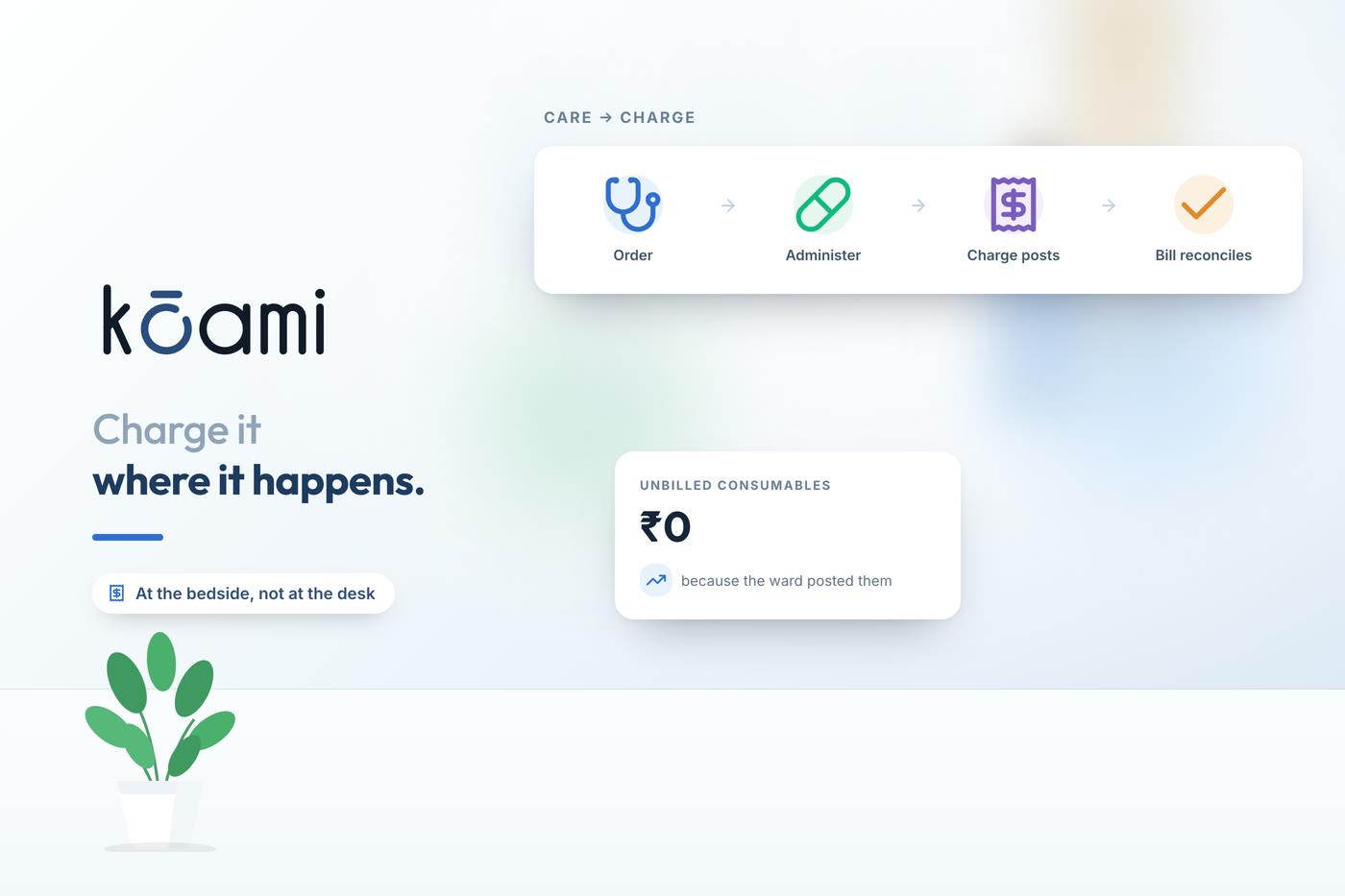
Billing in Kōami is a by-product of care rather than a task performed afterwards, because dispensing, ward consumption, theatre and diagnostics all write to the same record the bill reads from.
What is hospital billing software?
Hospital billing software prices and bills every service a patient receives — consultation, bed, procedures, pharmacy, diagnostics and consumables — against the correct tariff, package or payer arrangement, and produces the interim and final bills, receipts and audit-ready invoices. In a hospital it must also handle package and open billing together, insurance and cash splits, corporate rate cards, and scheme claims.
What the system has to do
Tariff and package engine
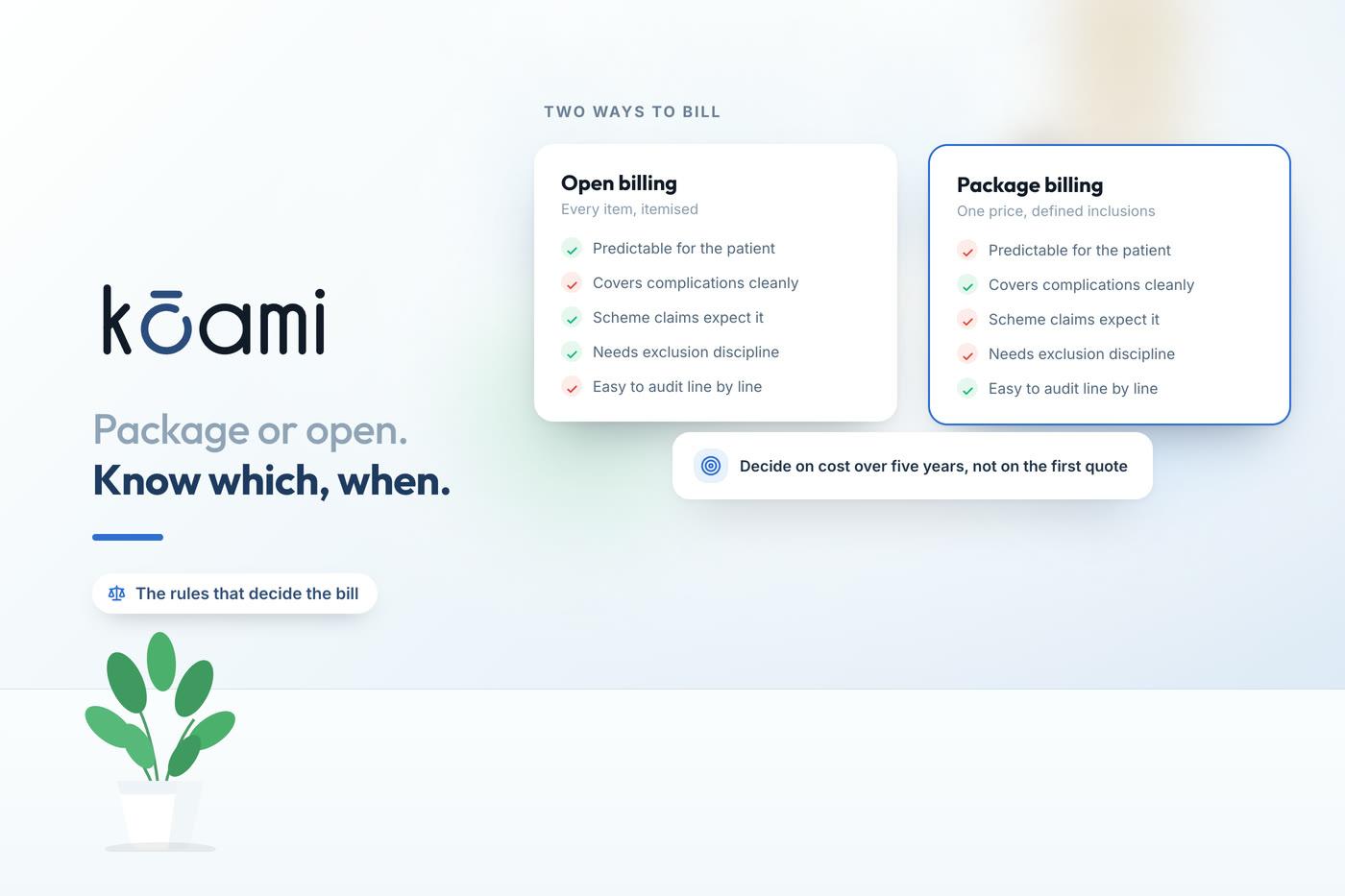
Rate cards by payer, sponsor, corporate and scheme, applied automatically. Package and open billing on the same admission, with mid-stay tariff changes handled rather than worked around.
Charges captured at the point of care
Pharmacy dispensing, ward indents and consumption, theatre consumables and lab and imaging orders post to the bill as the event occurs.
Approximate and pre-authorisation bills
A live estimate through the stay, so an enhancement request goes when the accrued amount approaches the sanctioned limit rather than at discharge.
Sponsor, TPA and corporate
Insurance and cash split on one bill, credit notes, partial refunds, and discount authority enforced by role rather than by convention.
Audit-ready GST invoices
Invoices in the format the payer and the auditor expect, out of the same engine, so finance is not reformatting anything afterwards.
OP counter throughput
Fast outpatient registration and billing with digital payment, because the OPD queue is created by the slow cases rather than the typical ones.
What to test before you buy billing software
Every vendor will demonstrate a simple cash bill. These are the cases that separate systems.
- Admit, change the tariff on day two, add a package on day three, discharge and bill.
- Split one admission between an insurer and the patient, with different discounts on each.
- Cancel a dispensed medicine after billing — check the stock ledger and the bill both reverse.
- Produce an interim bill for any inpatient at any moment, correct to the hour.
- Apply a corporate rate card automatically rather than by the clerk remembering it.
- Show the audit trail for a discount, including who authorised it.
- Generate the claim documents for a scheme patient from the admission record.
- Run peak-hour OP billing on forty terminals and time the print.
How it connects
Kōami Hospital
Billing is a module of the HMS, not a separate system, so the bill and the clinical record cannot disagree.
Read moreKōami Inventory
Pharmacy and consumables share one stock backbone, so a dispense is simultaneously a stock movement and a charge.
Read moreKōami PACS
Imaging orders and completed studies trigger charges without a person remembering to raise them.
Read moreGo deeper
Frequently asked questions
See it billed on your tariff
Bring one real admission — ideally a messy one with a mid-stay change and a partially approved claim — and we will run it end to end.
Book a demo