
Hospital software for small hospitals. Without an IT department.
Enterprise deployments fail at thirty beds for reasons that have nothing to do with the software. There is no project manager, no IT department, no six-month configuration phase, and no one who can absorb a bad week. The hospital runs on eight people who all do three jobs.
What works at this size is a short scope, cloud hosting so there is no server room, sensible defaults instead of a configuration exercise, and a support number that gets answered. Everything else can wait for year two.
What should a small hospital look for in management software?
A small hospital should look for cloud deployment so there is no server to maintain, a scope limited to registration, OPD, IPD basics, billing and pharmacy at go-live, configuration by sensible default rather than by project, transparent pricing that does not charge maintenance on unused modules, and responsive support. Depth in theatre, blood bank or advanced analytics can be added later; a failed go-live cannot be undone.
What the system has to do
Cloud, because there is no server room
No rack behind the accounts department, no UPS batteries, no hardware refresh landing the same year as the new equipment. Patching and backups become somebody else’s full-time job.
Registration and billing first
The two things that must work from day one. One UMR per patient, a fast OP counter, and a tariff engine that prices instead of asking the clerk to calculate.
Pharmacy on the same stock
Dispensing that bills itself, with batch and expiry handled by the system rather than by whoever is at the counter.
IPD without the ceremony
Admission, bed, transfer, discharge and the summary — the flow a small hospital actually runs, without a configuration project attached.
ABDM at the counter
ABHA creation and linking inside registration, so the national digital mission is something that happens rather than something planned.
Mobile for the people who move
Ward rounds, patient lists and approvals on a phone, because at this size the owner-doctor is also the administrator.
What not to buy in year one
The most expensive mistake at this size is buying breadth. A bundle discount on modules you will not use for three years is three years of maintenance on shelfware.
- Advanced analytics before the basic data is clean and complete.
- Nursing charting before the ward is comfortable with the system.
- Theatre and blood bank modules unless you run them today.
- Deep TPA workflows in a hospital that is largely cash.
- Custom forms that reproduce your paper exactly rather than adopting a workable standard.
- On-premise hosting when nobody on staff patches a server.
- Full financial accounting inside the HMS — export to your CA’s package instead.
- Any module you cannot name a user for by Monday.
How it connects
Kōami Hospital
The same platform larger hospitals run, scoped to what a small hospital needs at go-live.
Read morePricing
How Kōami is quoted, and what actually drives the number at this size.
Read moreClinic management software
If you are a practice rather than a hospital, start here instead.
Read moreGo deeper
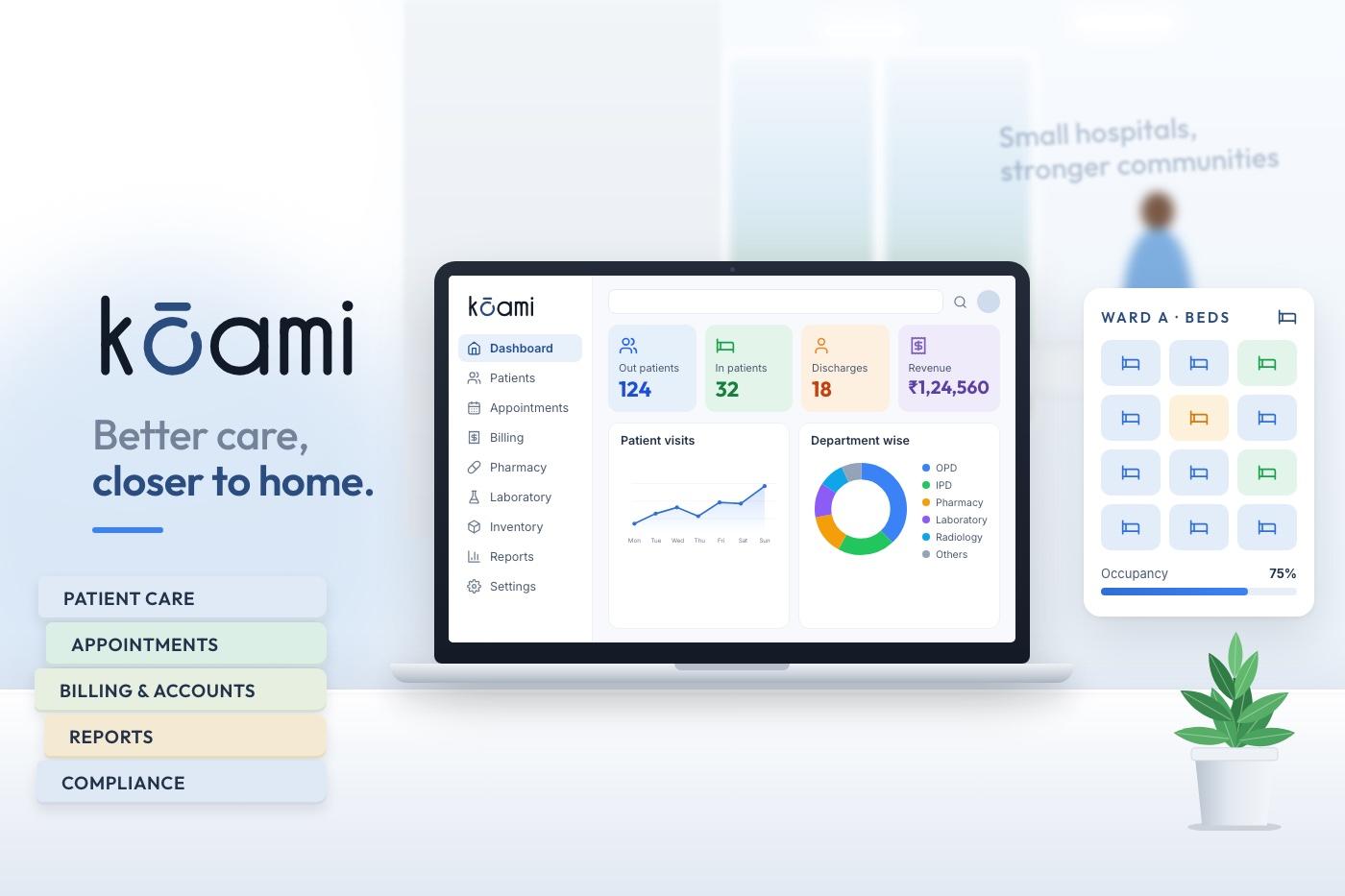 Nursing home management software in India: features, price and a checklist
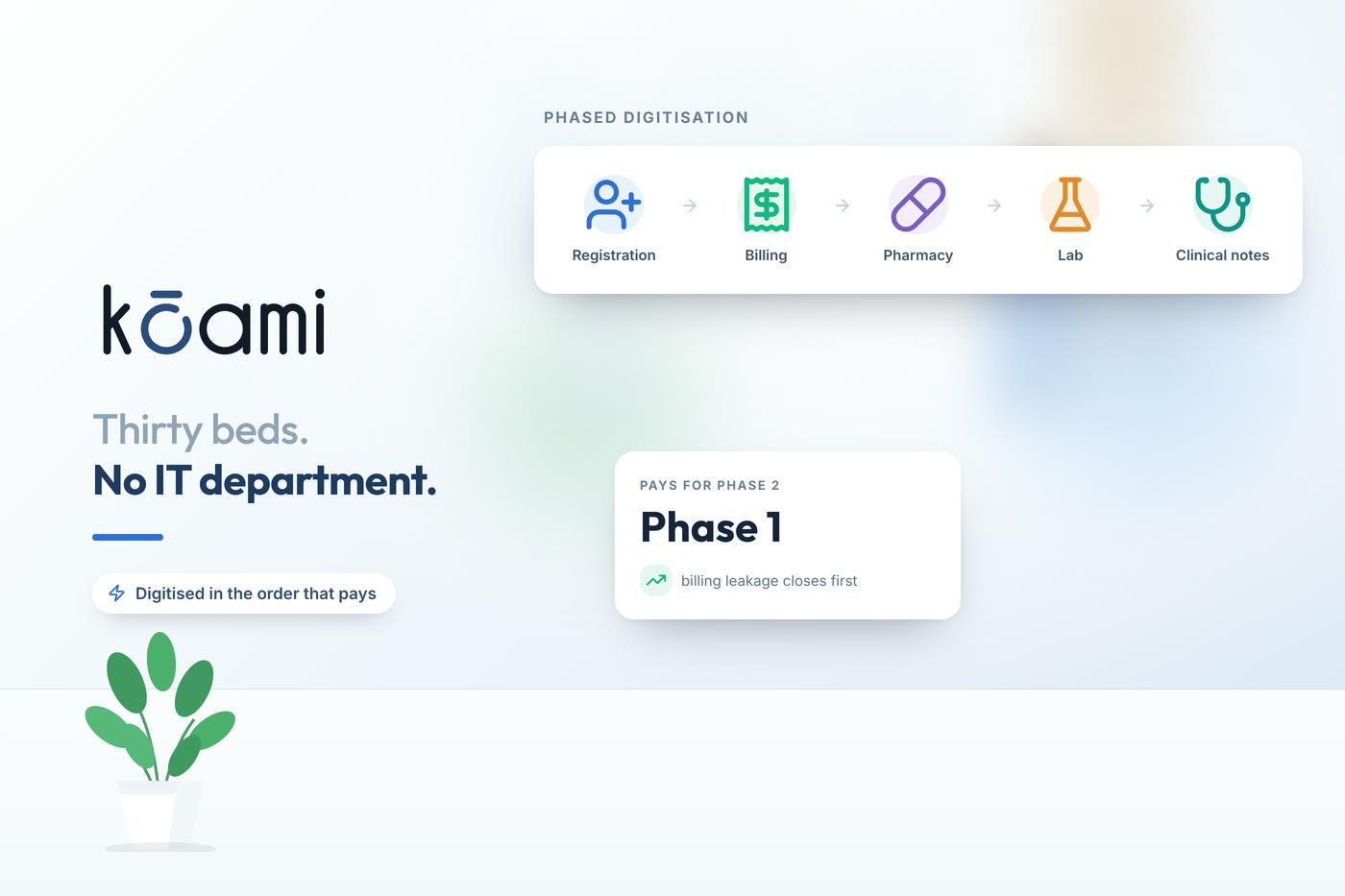 Digitising a 30-bed hospital without an IT department
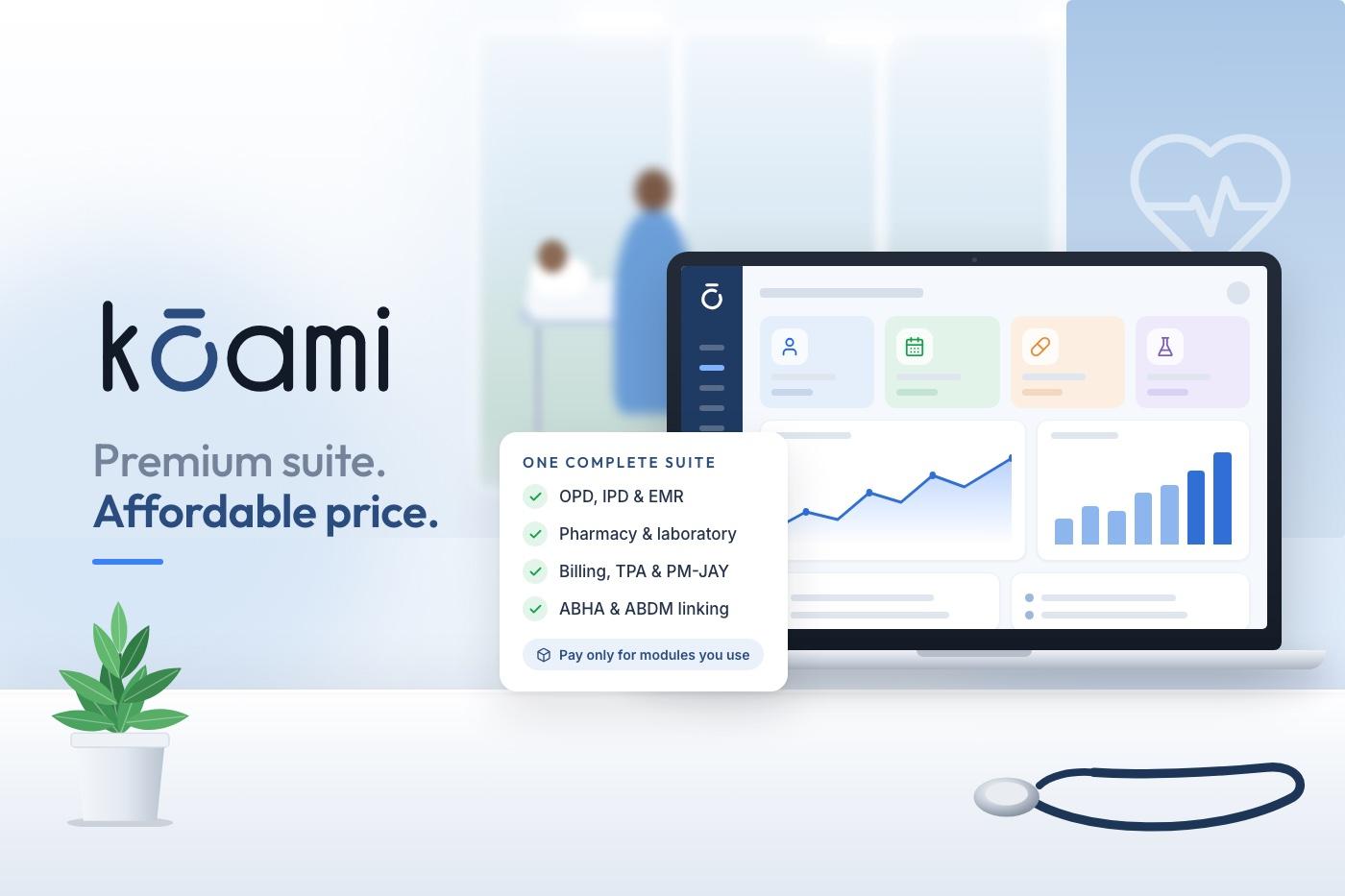 Affordable hospital management software: a premium suite without the enterprise price
- What hospital management software actually costs in India
- Paperless hospital in India: a roadmap from registration to discharge
- Cloud or on-premise: the argument every board has
- What actually happens on HMIS go-live weekend
- Training staff who have used paper for twenty years
- How to choose the right HMS in 2026
- The Digital Health Incentive Scheme: what ABDM will actually pay
Frequently asked questions
Scope it honestly
Tell us your bed count, whether you dispense, and whether schemes matter. We will tell you what you actually need at go-live and what can wait.
Book a demo