
IVF and ART clinic software. The cycle is the unit of work.
Most fertility clinics start on a general clinic EMR, because that is what was available when they opened. It works until the first ART audit, or the first time somebody has to reconstruct which straw in which goblet in which tank belongs to a couple who moved cities four years ago.
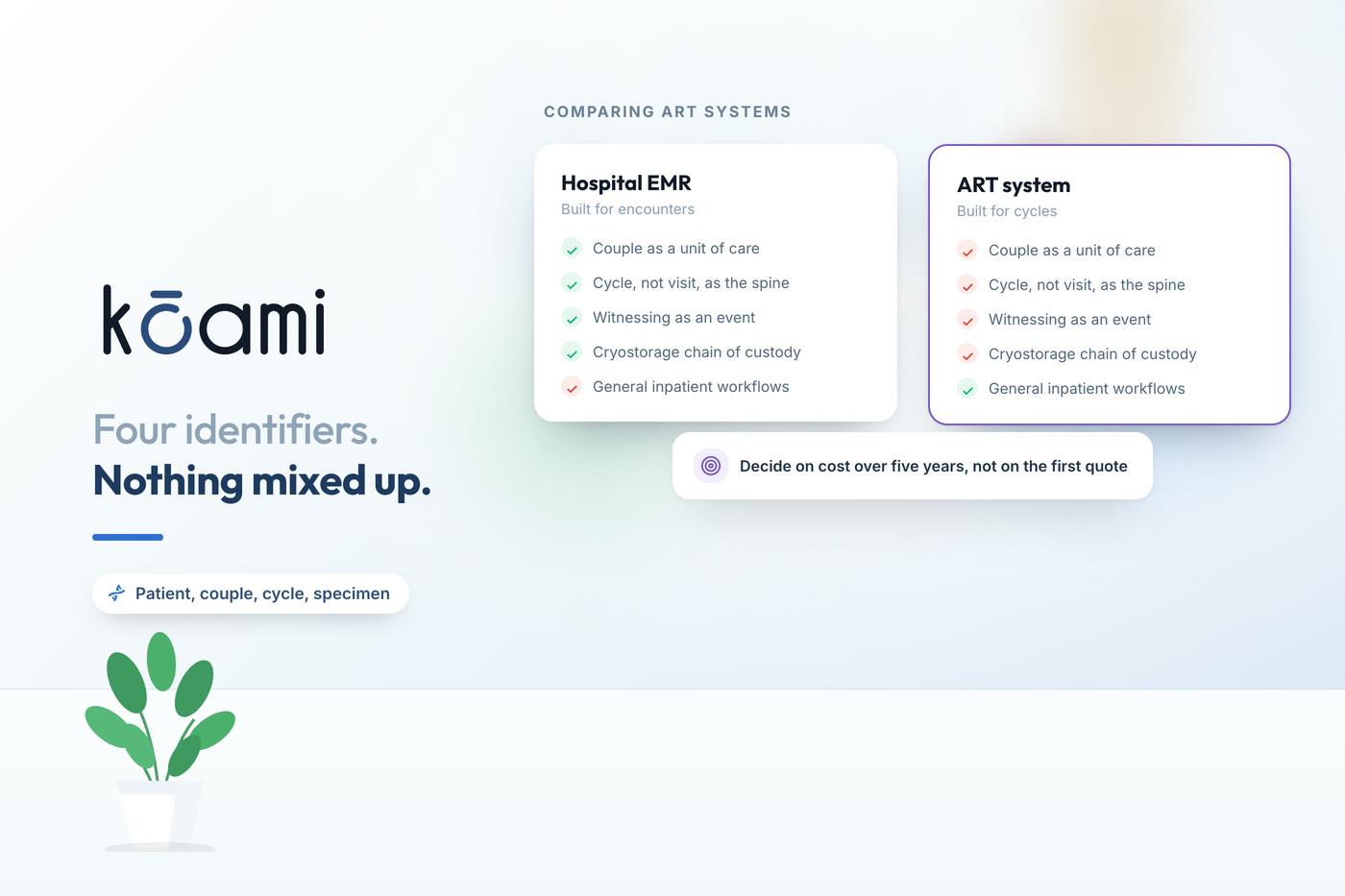
A system built for consultations is not a system built for cycles. Kōami Fertility is organised around the four identifiers fertility care actually depends on — patient, couple, cycle and specimen — so a straw, an oocyte or an embryo traces to the couple it belongs to.
What makes IVF clinic software different from a clinic EMR?
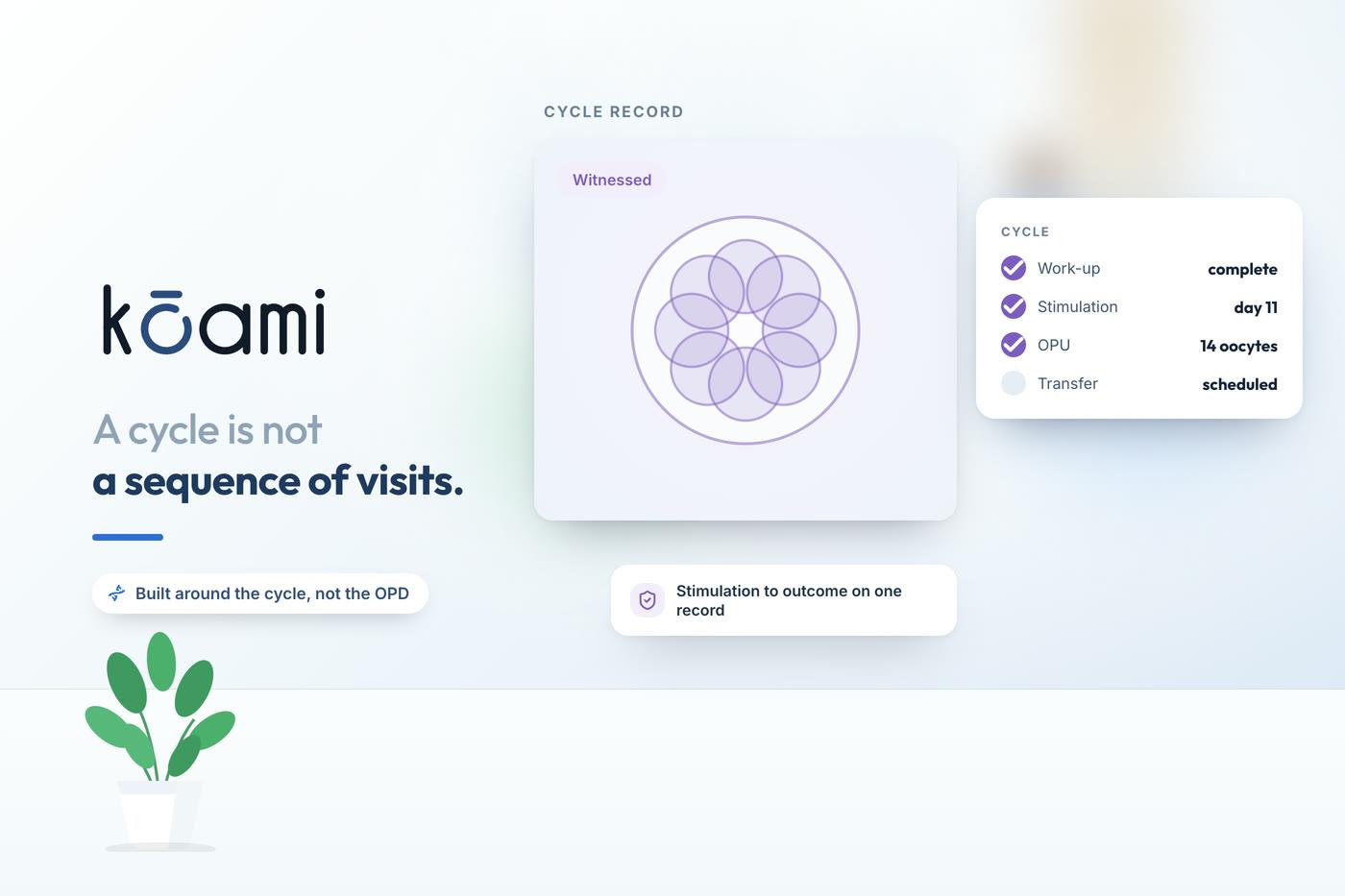
An IVF system is organised around the cycle and the specimen rather than the visit. A clinic EMR records encounters; an ART system records a treatment cycle with a stimulation protocol, a monitoring series, a retrieval, a laboratory phase in which biological material is handled and tracked, a transfer, and an outcome arriving months later that must attach back to the cycle that produced it.
What the system has to do
Cycle management across modalities
IVF, ICSI, IUI, frozen transfer and donor cycles as distinct pathways with their own steps and their own denominators, rather than one generic flow.
Stimulation monitoring
Day-wise dosing and follicular measurements recorded as structured values, charted so the clinician sees the response rather than reading it in prose.
Embryology worksheet
Fertilisation check, cleavage, day-wise grading, blastocyst scoring, biopsy and vitrification recorded against a specific specimen rather than against a patient in general.
Electronic witnessing
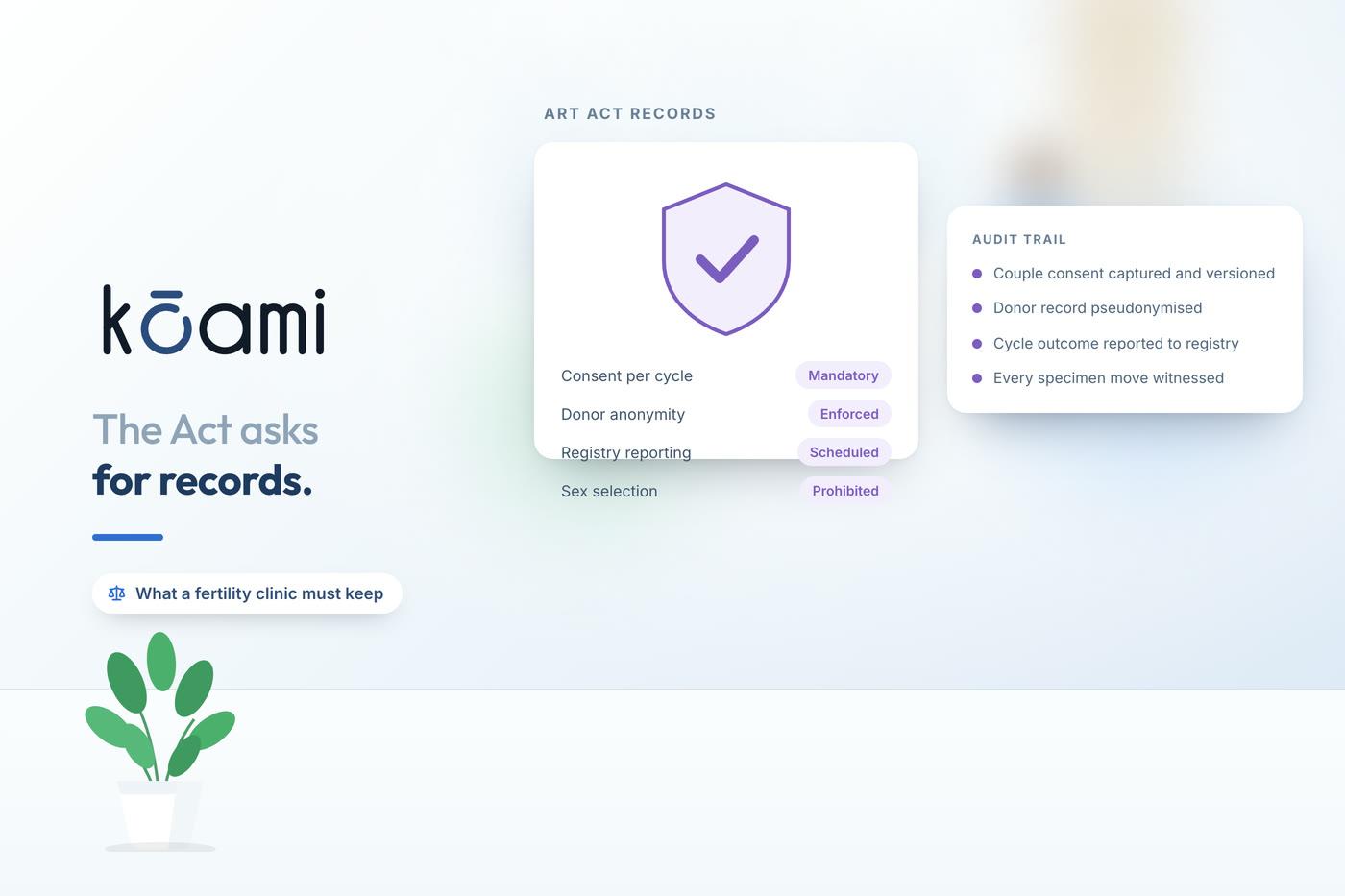
Every point at which gametes or embryos are handled captured as a timestamped event with two identities attached — evidence rather than a name in a box.
Cryobank chain of custody
Tank, canister, goblet, cane and straw, with movement history, consent status and storage expiry on the same record, so locating a specific straw is a search.
ART KPIs and registry
Outcomes sliced by cycle type, age band, fresh against frozen and own against donor, with the denominator visible, plus National ART Registry export from live data.
What to test in a fertility demo
If the demo cannot show a specific straw with its full movement history and consent status on one screen, it is a clinic EMR with an IVF label.
- Show a couple with two failed fresh cycles and one frozen transfer, on one screen.
- Locate straw number 1188 and show its movement, consent and expiry history.
- Witness a fertilisation step and show the event log entry it produced.
- Change the pregnancy rate denominator from per transfer to per cycle started.
- Generate the National ART Registry submission for last quarter.
- Show the consent set for a donor oocyte cycle and the template version used.
- Produce all of a patient’s data for a DPDP request.
- Show how the clinic’s billing and pharmacy connect to the cycle record.
How it connects
Kōami Fertility
The full ART product: work-up, consent, stimulation, OPU, andrology and embryology, cryostorage, transfer and outcome.
Read moreKōami Hospital
Registration, billing, pharmacy and diagnostics on the same identity, so a fertility centre does not run two patient masters.
Read moreClinic management software
The outpatient side of a fertility practice — appointments, records, billing and recall.
Read moreGo deeper
Frequently asked questions
Ask us to find straw 1188
Bring a real cryostorage question and a real cycle history. Those two requests separate ART systems from clinic EMRs faster than any feature list.
Book a demo