
Hospital inventory management software. Stock the wards can see.
Ask a hospital finance head where the money leaks and they name consumables first. Ask the stores in the same hospital and they describe firefighting instead — stock-outs of things that should never run out, write-offs of things that were over-ordered, and a ward indent process that consumes half of somebody’s day.
Both are the same failure: records updated after the fact rather than as events happen. Kōami Inventory keeps stock, consumption and cost current because the dispense, the ward issue and the theatre consumable are the same events that move the stock.
What is hospital inventory management software?
Hospital inventory management software tracks medical and non-medical stock across every store, ward, pharmacy and theatre, with batch and expiry control, automatic reorder before stock-outs, a governed purchase-to-payment flow, and consumption recorded against the patient so it reaches the bill. It differs from general inventory software because hospital stock is batch-controlled, expiry-bound, partly regulated, and chargeable to a patient.
What the system has to do
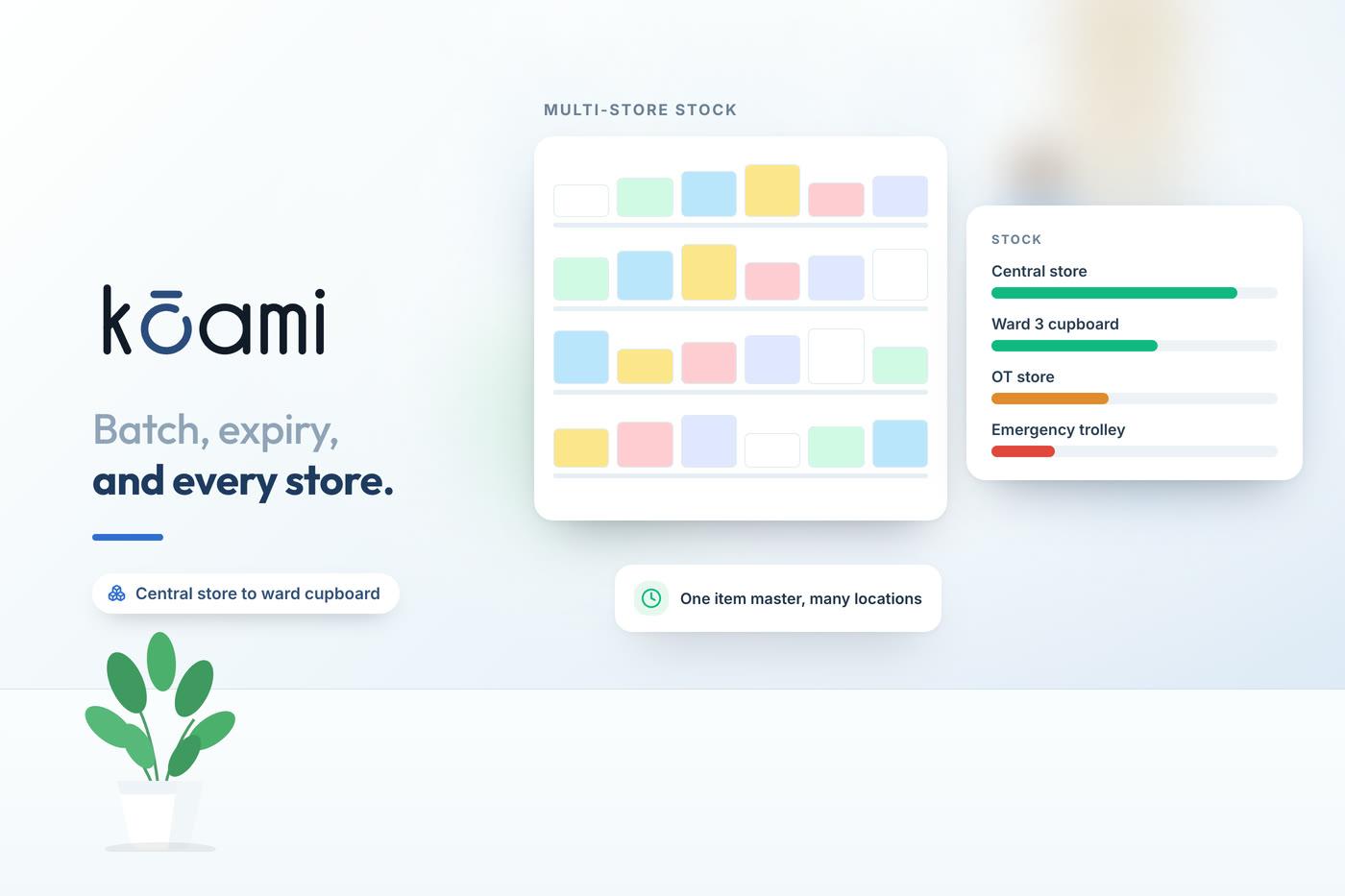
Multi-store stock
Main store, sub-stores, pharmacy counters, ward floor stock, theatre and every branch, with transfers between them and one visible position across all.
Batch, lot and FEFO
Batch and expiry captured at goods receipt and carried through issue, with first-expiry-first-out applied by the system and expiry alerts early enough to return goods under vendor terms.
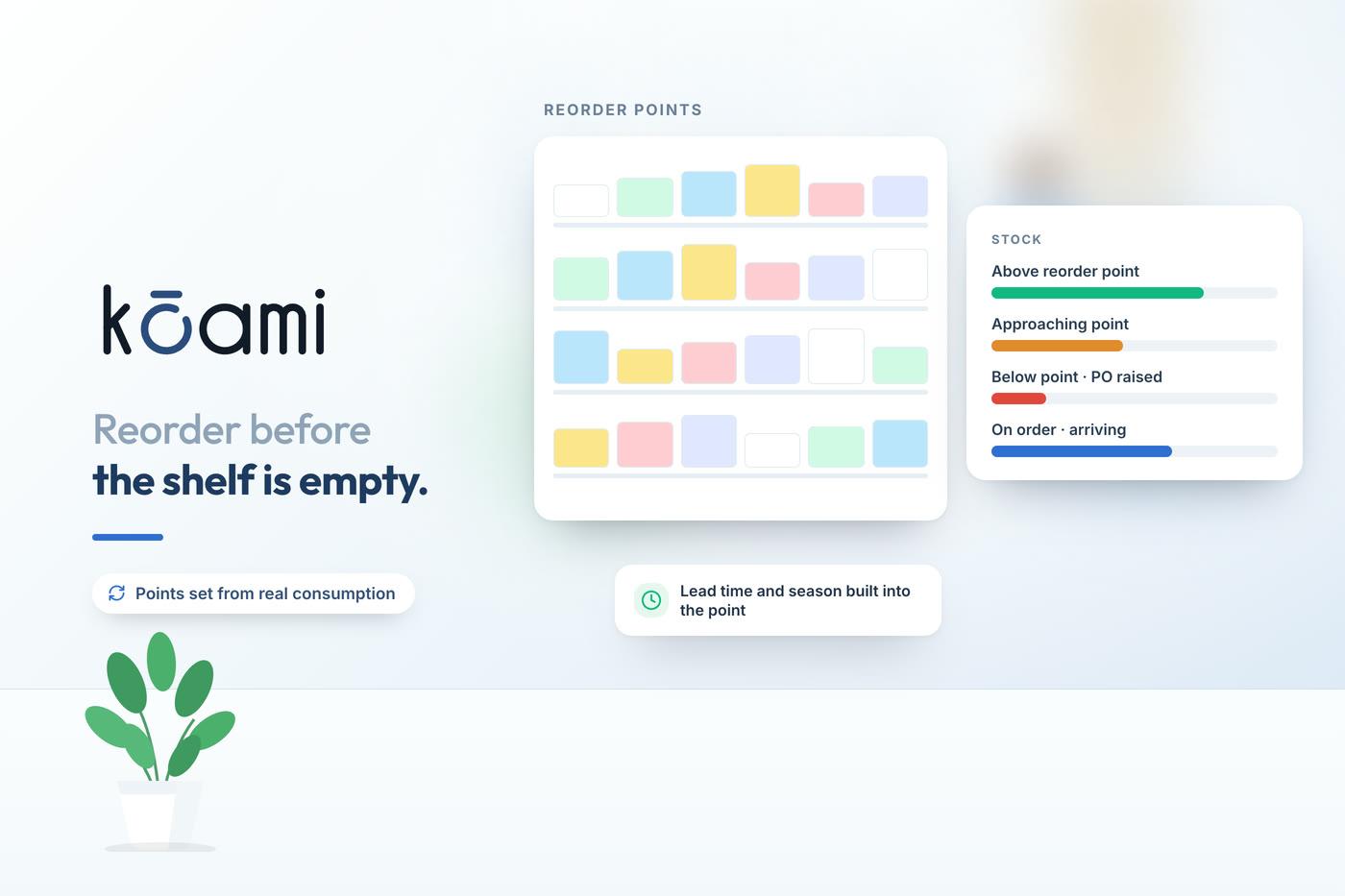
Reorder automation
Min/max and reorder-point rules driven by real consumption and lead time, raising purchase orders automatically, with shortage alerts and demand forecasting behind them.
Purchase and vendors
Requisitions, quotation comparison, approval workflows and vendor management, so procurement is governed rather than negotiated over the phone.
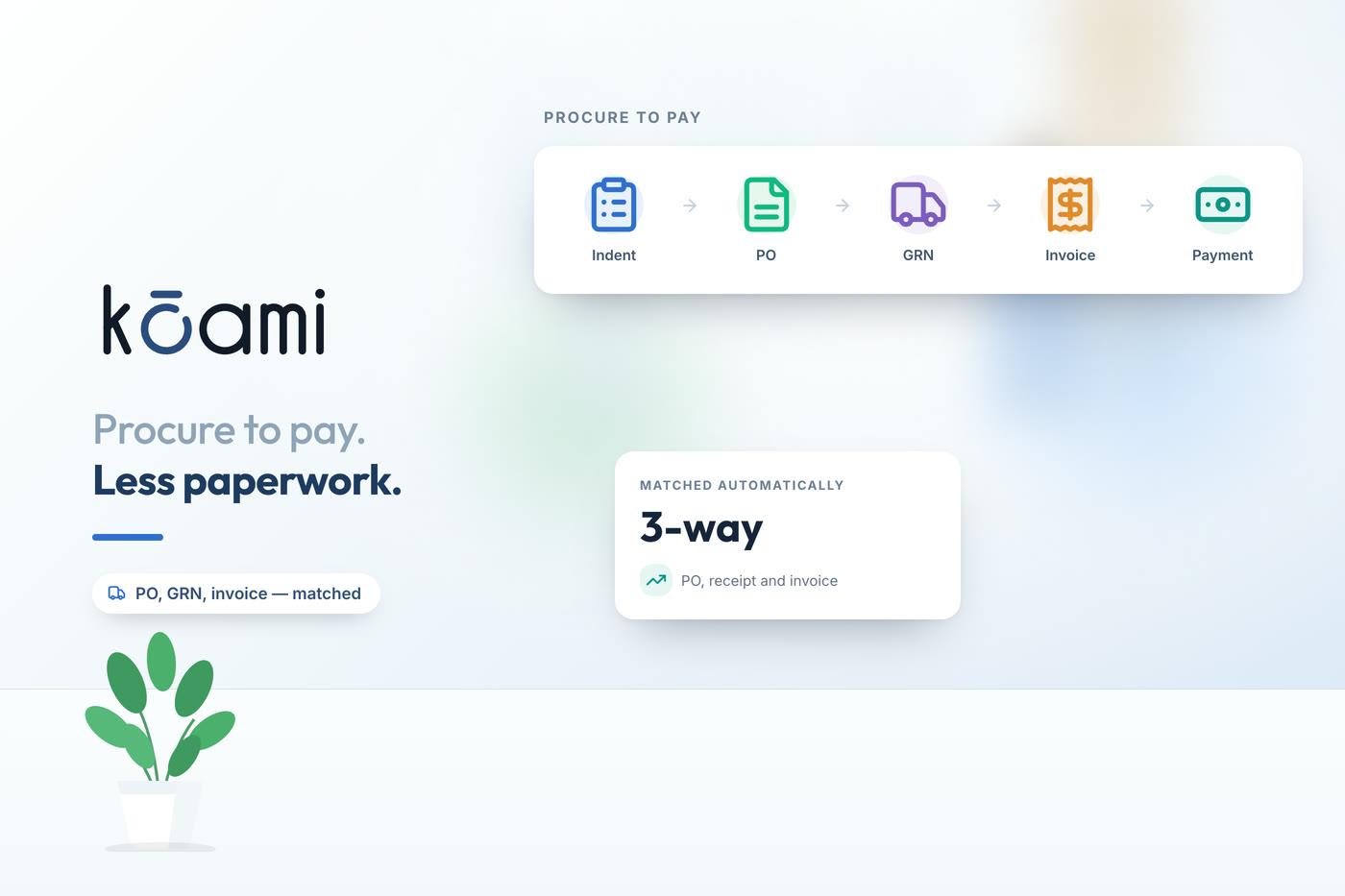
GRN and three-way match
Goods receipt against the purchase order with quality checks, returns and debit notes, and invoice matching enforced rather than assumed.
Consumption analytics
Department-wise consumption, wastage, cost per unit and budget tracking — the numbers a procurement negotiation actually needs.
What to test in an inventory demo
The straightforward receipt looks identical everywhere. Ask for the movements and the recall.
- Receive one purchase order containing two batches with different expiry dates.
- Issue against a ward indent and show the ward’s current holding.
- Show every item expiring within ninety days, by store, with vendor return terms.
- Transfer stock between two branches and show both ledgers.
- Recalculate reorder levels from the last six months of consumption.
- Show a theatre implant reaching the patient’s bill.
- Reject part of a delivery and produce the debit note.
- A batch is recalled — list every patient who received it.
How it connects
Kōami Inventory
The full supply chain product: stock, purchase, reorder, GRN, asset tracking and consumption analytics.
Read morePharmacy management software
Pharmacy draws from the same stock backbone, so a dispense is a stock movement and a charge at once.
Read moreHospital billing software
Consumables used on a patient reach the bill without a separate posting step.
Read moreGo deeper
Frequently asked questions
Bring one month of consumption
Six months of issue data is enough to show what your reorder points should be versus what they are. That comparison is usually the whole business case.
Book a demo