Procure-to-Pay Without the Paperwork
Published
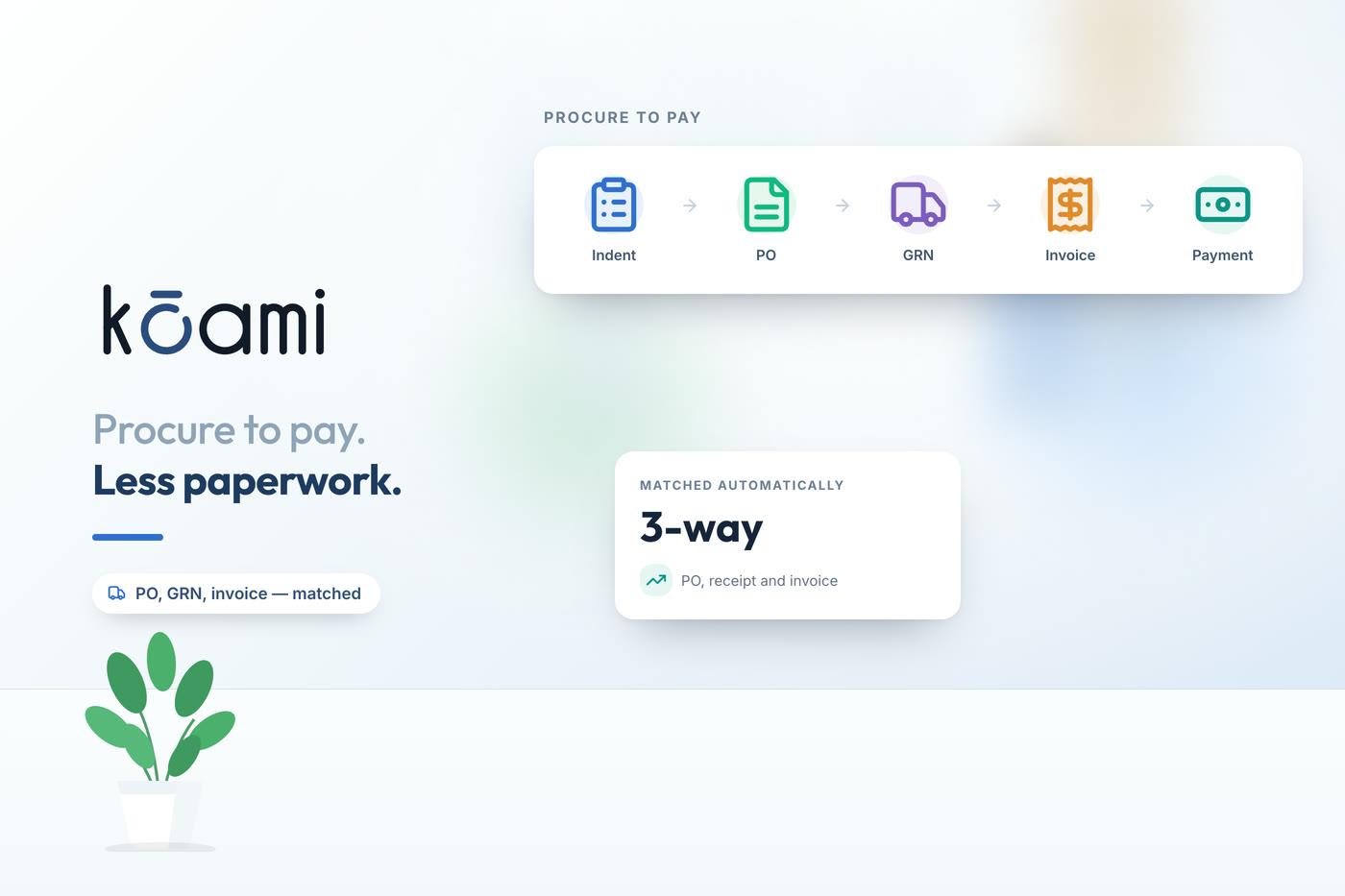
Procurement is where good hospitals lose money and time in ways that never show up on a clinical audit. A single purchase can pass through a requisition, a quotation, an approval, a purchase order, a delivery, a goods receipt, an invoice, and a payment - and at every handoff there is a form, a signature, a phone call, and a chance to lose the thread. When those steps live in email, spreadsheets, and a shared drive of scanned PDFs, the finance team spends its month reconciling instead of controlling. Procure-to-pay done well is not about buying software to digitise the paperwork. It is about removing the paperwork so the control that mattered - who approved what, and does the invoice match reality - is enforced by the flow itself.
The paper trail that quietly costs a fortune
Before you can fix procurement, it helps to see honestly where the money and hours leak. In a paper-and-email process, the usual suspects are always the same:
- Requisitions that sit in someone's inbox because there is no queue and no owner.
- Purchase orders raised without checking an agreed price or preferred vendor, so the hospital pays retail on a contracted item.
- Deliveries received against a delivery note that nobody reconciles to the PO, so short-shipments and wrong items slip through.
- Invoices paid because they arrived and looked plausible, not because they were checked against what was ordered and what was received.
- Duplicate payments, because the same invoice came by email and by post and nobody caught it.
None of these are exotic failures. They are the ordinary friction of a manual process, and across a year they add up to real money and a finance team that is always behind. The fix is to make each step create a record that the next step is forced to check.
One flow from requisition to purchase order
The front half of procure-to-pay is getting from "a ward needs something" to "a purchase order is with the vendor" without losing days to chasing. In Kōami that path is a single connected flow. A requisition is raised against a cost center, routed to the right approver by value and category, and - once approved - turned into a purchase order that already knows the preferred vendor and the agreed price.
A purchase order is a promise. If it does not carry the agreed price and the right vendor, you are negotiating again at invoice time, when you have the least leverage.
Because the requisition, the approval, and the PO are the same object moving through states rather than three documents retyped, the audit trail is a byproduct, not a chore. Anyone can see who requested, who approved, and on what terms, without opening a filing cabinet. And because inventory and procurement sit in the same ecosystem, a reorder trigger from the store can draft the requisition automatically, so routine replenishment does not wait for someone to notice.
GRN and the three-way match
The moment goods arrive is the moment control is won or lost. A goods receipt note (GRN) records what actually turned up - the quantities, the batches, the condition - against the purchase order that ordered it. That comparison is the first line of defence. If forty units were ordered and thirty-eight delivered, the GRN catches it there, at the loading dock, not six weeks later when finance is puzzling over a mismatched invoice.
The real discipline is the three-way match: the purchase order, the goods receipt, and the vendor invoice all have to agree before payment is released. This is the single most effective control in procurement, and it is almost impossible to enforce by hand at volume:
- The PO says what was ordered and at what price.
- The GRN says what was actually received.
- The invoice says what the vendor is charging.
When all three line up, payment can proceed with confidence. When they do not, the exception is flagged for a human rather than paid on trust. Kōami runs this match automatically, so the finance team's attention goes to the handful of genuine discrepancies instead of the hundreds of clean transactions. Short-shipments, price creep, and duplicate invoices surface as exceptions rather than slipping through as payments.
Vendors and cost centers you can actually see
Managing vendors well is not about having their phone numbers. It is about knowing, at any moment, how each one performs and what you are actually spending with them. When every PO, GRN, and invoice is connected, the vendor record stops being a contact card and becomes a performance history: who delivers on time, who short-ships, whose lead times have quietly doubled, who keeps sending invoices that do not match.
That history feeds better decisions. The lead-time data flows back to inventory so reorder points reflect the vendor's real behaviour, not their promises. The pricing data shows where a contracted rate is being honoured and where it is drifting. And because spend is tagged to a cost center, department heads can see what their unit is consuming and finance can hold budgets against reality rather than guesswork.
- Track on-time delivery and fill rate per vendor, from the GRN data you already capture.
- Watch price variance against agreed rates so contract leakage is visible.
- Attribute every purchase to a cost center so budgets mean something.
- Keep the full approval and match trail on each transaction for clean internal review.
None of this requires extra data entry. It falls out of running the flow properly, because each step already recorded what it needed to.
Paying with confidence, and paying once
Payment should be the calm end of a controlled process, not the anxious moment where you hope the numbers were right. When the three-way match has already cleared, releasing payment is a decision made on evidence: this was ordered, this was received, this is the correct amount, and this invoice has not been paid before. Duplicate detection stops the same bill being settled twice. The approval chain means no single person can quietly push through a payment that nobody else saw.
Procure-to-pay without the paperwork is not a promise of less work for its own sake. It is a promise that the work which remains is the work that matters - negotiating with vendors, managing budgets, resolving real exceptions - while the repetitive checking that used to eat the finance team's month is handled by a flow that never skips a step. Kōami ties requisition, PO, GRN, invoice, and payment into that one flow, so control stops depending on whether someone remembered to reconcile, and starts being simply how the process runs.
Follow Kōami on LinkedIn
Get the next guide on hospital operations, software and compliance in your feed, as soon as it is published.