
Eye hospital and ophthalmology software. Built for high-volume surgical days.
An eye hospital runs two businesses in one building. There is a very high-volume outpatient clinic where a patient moves through vision testing, refraction, dilation, investigation and consultation as a sequence of stations, and there is a surgical operation — most of it cataract — that succeeds or fails on how many cases a list can take without the theatre waiting.
A general hospital EMR is built for neither. It records a consultation as a note when ophthalmology records findings per eye, it has nowhere structured to put a refraction, and it treats an implanted intraocular lens as a consumable rather than as a lot-traceable device attached to a specific eye of a specific patient.
What is eye hospital software?
Eye hospital software is an ophthalmology-specific clinical and operational system: findings and investigations recorded per eye rather than per patient, structured refraction and vision records that trend over time, station-based OPD flow through vision, refraction, dilation and consultation, high-volume surgical list planning, and intraocular lens stock traceable by lot to the eye it was implanted in.
What the system has to do
Everything recorded per eye
Right and left as first-class fields across findings, investigations, procedures and billing — the single structural difference a general EMR never makes.
Structured refraction and vision
Unaided and corrected acuity, sphere, cylinder, axis, add and IOP as values that trend across visits, rather than a sentence in a note nobody can chart.
Station-based OPD flow
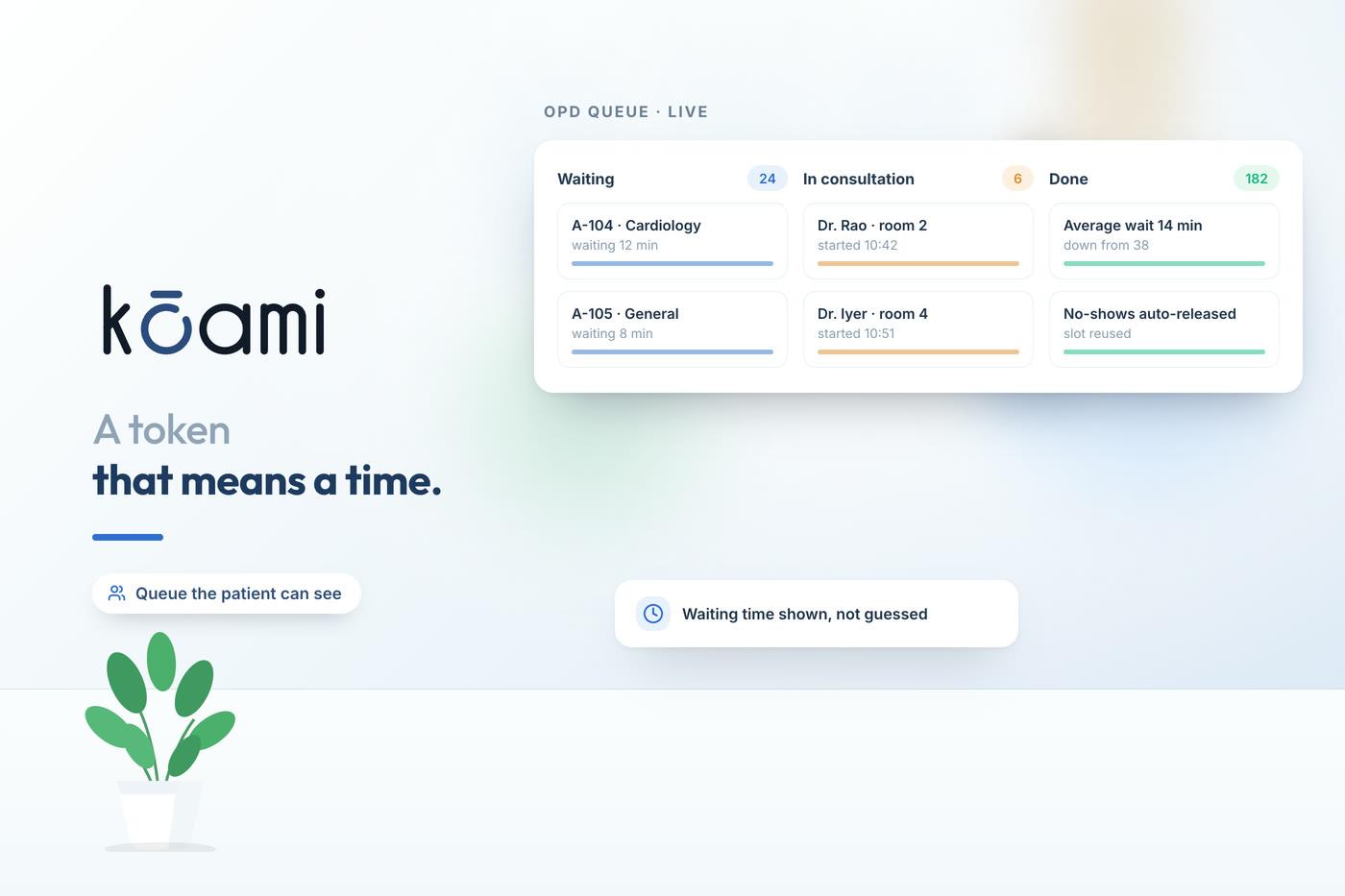
A patient tracked through vision, refraction, dilation, investigation and consultation, with the dilation wait modelled as a real state so the queue display tells the truth.
Investigation imaging attached
OCT, fundus, topography and field studies held against the eye and visible in the consultation, viewed in the browser rather than on the machine in the other room.
High-volume list planning
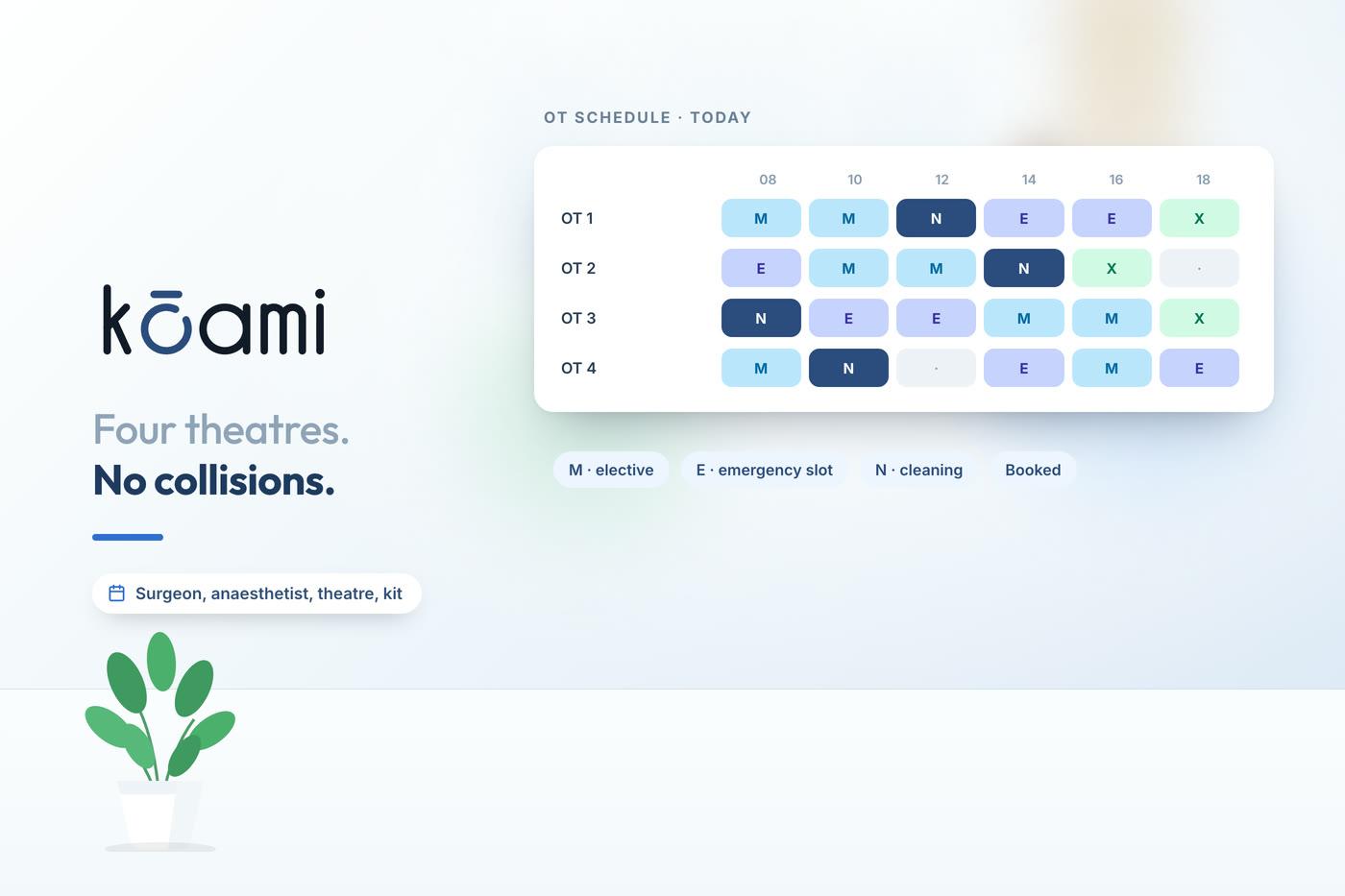
Cataract lists sequenced by surgeon, theatre and biometry readiness, so a list of thirty runs without the theatre waiting on a missing IOL power.
IOL traceability and packages
Lenses tracked by model, power and lot to the eye they were implanted in, and priced inside the surgical package with scheme rules applied.
What to test in an ophthalmology demo
Bring one cataract list and one patient with three years of refraction history. Both are ordinary and both break generic systems.
- Record different findings for the right and left eye, and show them separately on the record.
- Chart one patient’s refraction and IOP across six visits.
- Move a patient through vision, refraction and dilation, and show the true wait at each.
- Open an OCT alongside the consultation without leaving the record.
- Plan a thirty-case cataract list and show which cases lack biometry.
- Implant a specific IOL by lot and power, then trace that lot back to the eye.
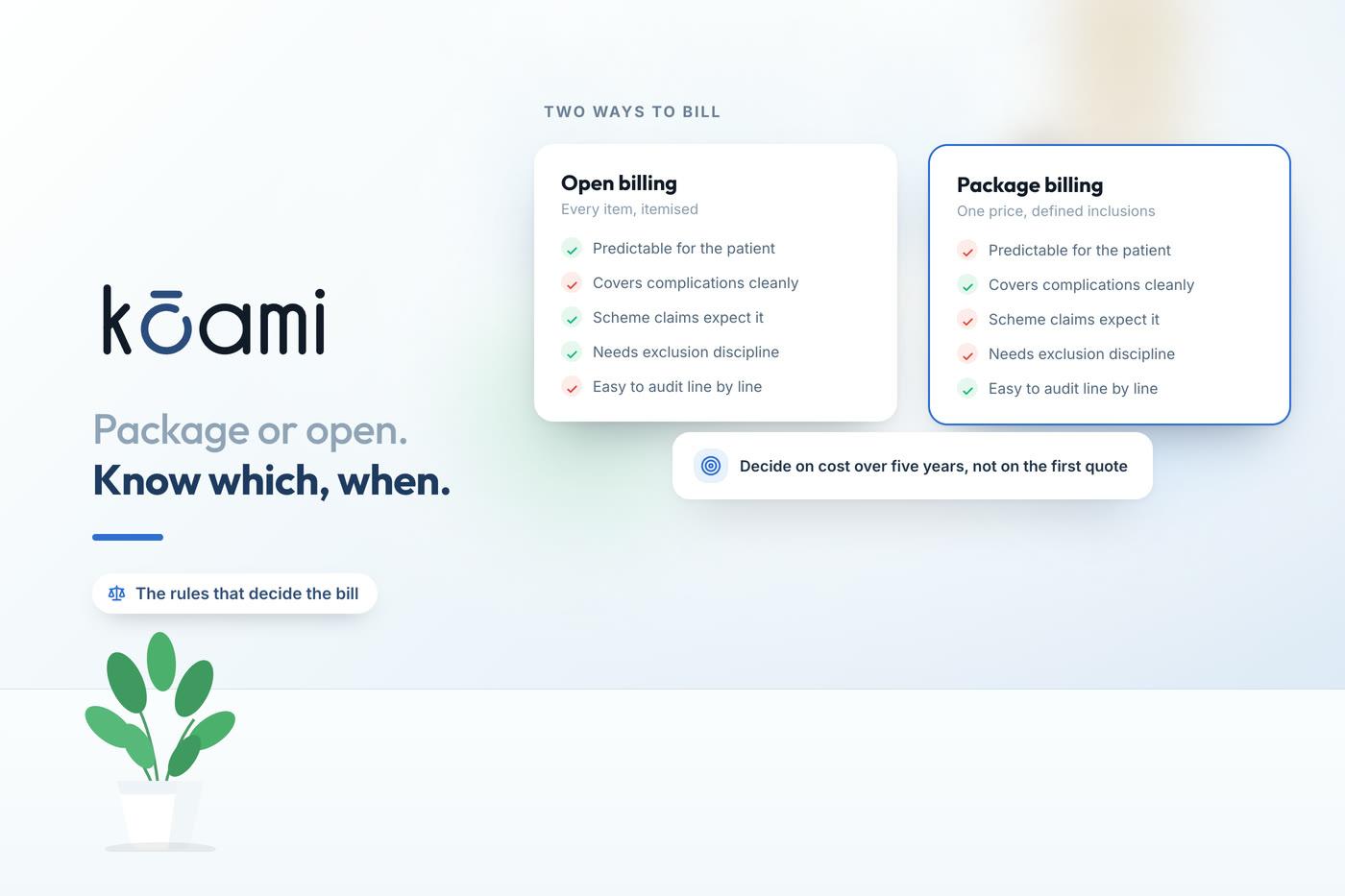
- Bill a cataract package under a scheme, with the lens inside the package.
- Produce surgical outcomes by surgeon, with complications recorded per eye.
How it connects
Kōami Hospital
Registration, OPD, IPD, theatre and billing on one record, with ophthalmology’s per-eye structure inside it.
Read moreOperation theatre management
List planning, turnaround between cases and utilisation — the numbers a high-volume cataract day runs on.
Read moreHospital inventory management
IOL and consumable stock with lot and expiry, and the traceability an implant demands.
Read moreOPD management software
The station-based queue that a multi-stop eye clinic needs and a single-queue OPD module cannot express.
Read moreGo deeper
Frequently asked questions
Bring one cataract list
Thirty cases, your surgeons, your IOL stock. How cleanly that list plans and runs tells you what the rest of the system is like.
Book a demo