Scheduling the Operating Theatre Without Collisions
Published
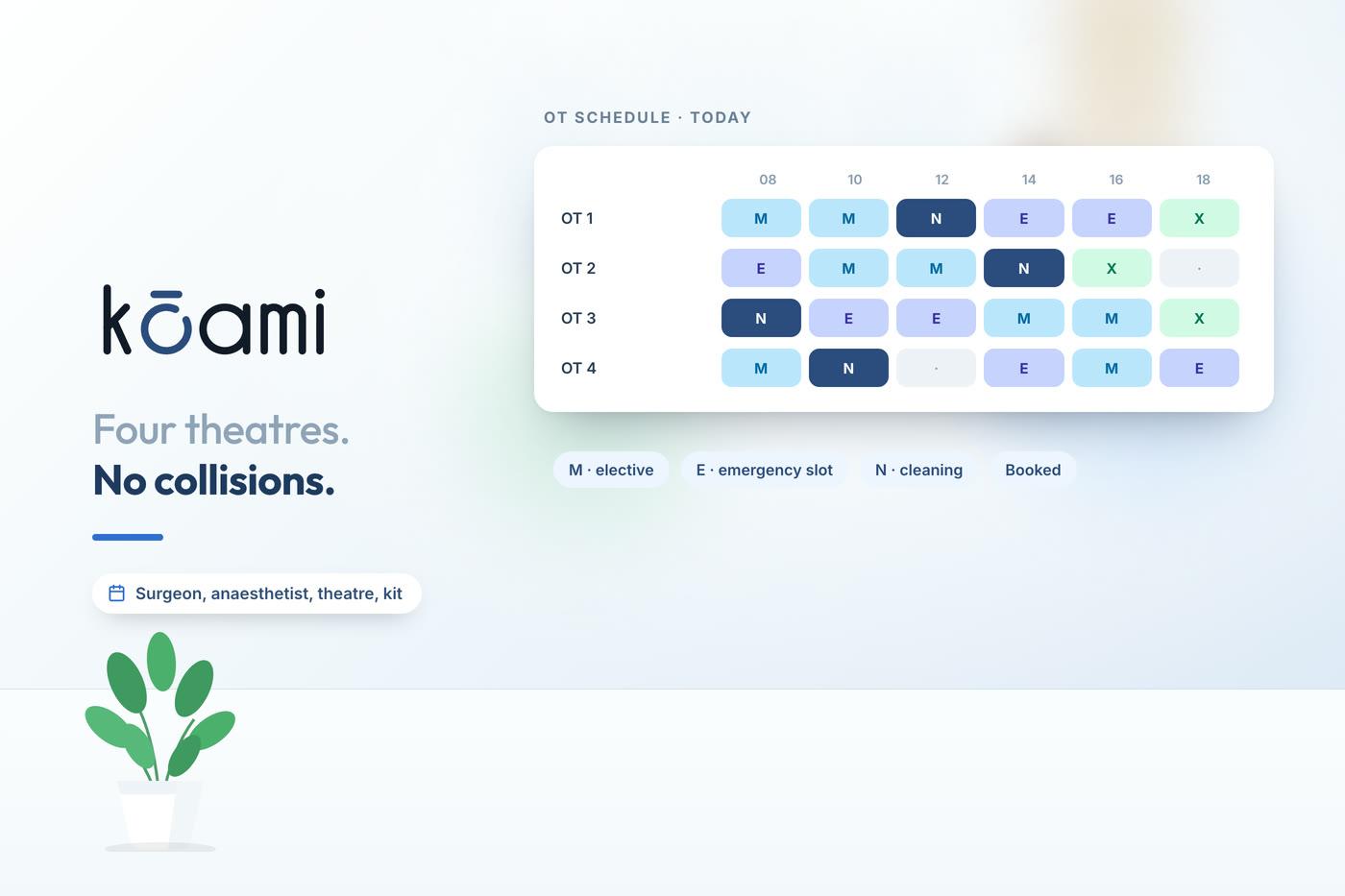
The operating theatre is the most expensive room in the hospital and the one least forgiving of a scheduling mistake. A collision there is not a double-booked meeting room; it is an anaesthetised patient, a scrubbed team, and a surgeon waiting because the previous case overran and nobody rebalanced the list. The OT schedule sits at the intersection of surgeons, anaesthetists, nurses, equipment, and the patient's own preparation, and every one of those has to line up in the same room at the same time. Scheduling it well is less about a prettier calendar and more about respecting the constraints that, when ignored, turn into cancellations, overtime, and a theatre that runs at a fraction of its capacity.
Why theatre scheduling is genuinely hard
People who have never built an OT list underestimate it because a calendar looks simple. The difficulty is that a single slot is not one resource but a set of resources that must all be free together, and each has its own rules:
- The surgeon has to be available, and not already listed in another theatre.
- The anaesthetist has to cover the case, and cannot be in two rooms at once.
- The theatre itself has to be free, cleaned, and turned over from the previous case.
- The specific equipment or implant set has to be present, sterilised, and not committed elsewhere.
- The patient has to be prepared - fasted, consented, pre-assessed, and physically ready.
Book a slot that satisfies four of these and misses the fifth, and you have a cancellation waiting to happen. A booking system that only tracks the room is not scheduling the OT; it is scheduling the furniture. Real OT scheduling checks every constraint at the moment of booking, so the collision is caught on screen rather than discovered in the corridor.
Booking against every constraint, not just the room
The core move is to make a booking impossible to confirm until all the resources it needs are actually free. When the scheduler proposes a case, Kōami checks the surgeon, the anaesthetist, the theatre, and the required equipment set against everything else already on the list, and refuses the clash instead of quietly accepting it. A double-booked surgeon is flagged where it can still be fixed.
The cheapest cancellation is the one prevented at booking. Every other kind is paid for in wasted theatre time and a patient sent home unoperated.
That validation is what separates a scheduling system from a shared diary. It also lets the scheduler see the real picture - which surgeon has capacity on Thursday, which theatre has a gap, whether the implant set booked for the morning case will be back in time for the afternoon one. Estimated case durations feed the layout, so the list reflects how long procedures actually take rather than an optimistic guess, and the turnover time between cases is built in rather than assumed to be zero.
Turnaround is where theatres win or lose time
Ask why a theatre managed six cases instead of eight, and the answer is usually not the surgery. It is the gaps between cases - the turnaround, when one patient leaves, the room is cleaned, the next set is prepared, and the next patient is brought in. Those gaps are where capacity quietly evaporates, and they are almost always longer than anyone admits.
Scheduling has to treat turnaround as a real, planned interval, not dead space that magically disappears. That means:
- Building realistic cleaning and set-up time into the list, per procedure type.
- Sequencing cases so that equipment and staff flow from one to the next without a scramble.
- Having the next patient prepared and ready before the current case finishes, not after.
- Watching the list live so that when one case overruns, the downstream cases are adjusted deliberately rather than colliding.
When the schedule respects turnaround honestly, the theatre stops overrunning into the evening and starts finishing its planned list within the planned day. Kōami keeps the running list visible so the OT coordinator can see slippage as it happens and rebalance - move a short case forward, alert the next surgeon, adjust the afternoon - instead of finding out at handover that the day has fallen an hour behind.
The safe-surgery checklist as part of the flow
A schedule that packs the theatre efficiently but drops the safety steps has optimised the wrong thing. The safe-surgery checklist - the structured pauses before induction, before incision, and before the patient leaves the room - is not paperwork to be squeezed out when the list is tight. It is the guardrail that catches the wrong-site, wrong-patient, wrong-procedure errors that no amount of scheduling efficiency can be allowed to risk.
The practical answer is to make the checklist part of the case flow rather than a separate form that competes with it for time. When the pre-operative verification, the sign-in, the time-out, and the sign-out are steps in the same record that carries the schedule, they get done because they are part of moving the case forward, not despite the pressure of the list. Kōami supports the checklist as an integral part of the OT workflow, so the drive for throughput and the discipline of safety pull in the same direction instead of against each other.
Measuring utilisation to plan better lists
You cannot improve theatre efficiency you do not measure, and the measures that matter are specific. Utilisation - the share of available theatre time actually spent operating - tells you whether the room is earning its keep. Start delays tell you whether the first case of the day is dragging the whole list. Turnaround times tell you where the hidden gaps are. Cancellation rates, and the reasons behind them, tell you which constraint keeps breaking.
Those numbers turn scheduling from a daily firefight into a plannable operation. If first-case start times slip consistently, you fix the morning preparation, not the surgeon. If a particular procedure always overruns its booked slot, you adjust its estimated duration so future lists are honest. If cancellations cluster around missing equipment sets, you fix the sterilisation loop. Kōami keeps this history so the OT manager tunes the next month's lists against evidence rather than the loudest complaint from last week.
Scheduling the theatre without collisions is not a scheduling trick. It is the accumulation of honest constraints checked at booking, realistic turnaround built into the list, safety kept inside the flow rather than outside it, and utilisation measured so the plan gets better each cycle. Get those right and the most expensive room in the hospital finally spends its time doing the thing it exists for - operating - instead of waiting.
Follow Kōami on LinkedIn
Get the next guide on hospital operations, software and compliance in your feed, as soon as it is published.