Live Bed Management from ADT to Discharge
Published
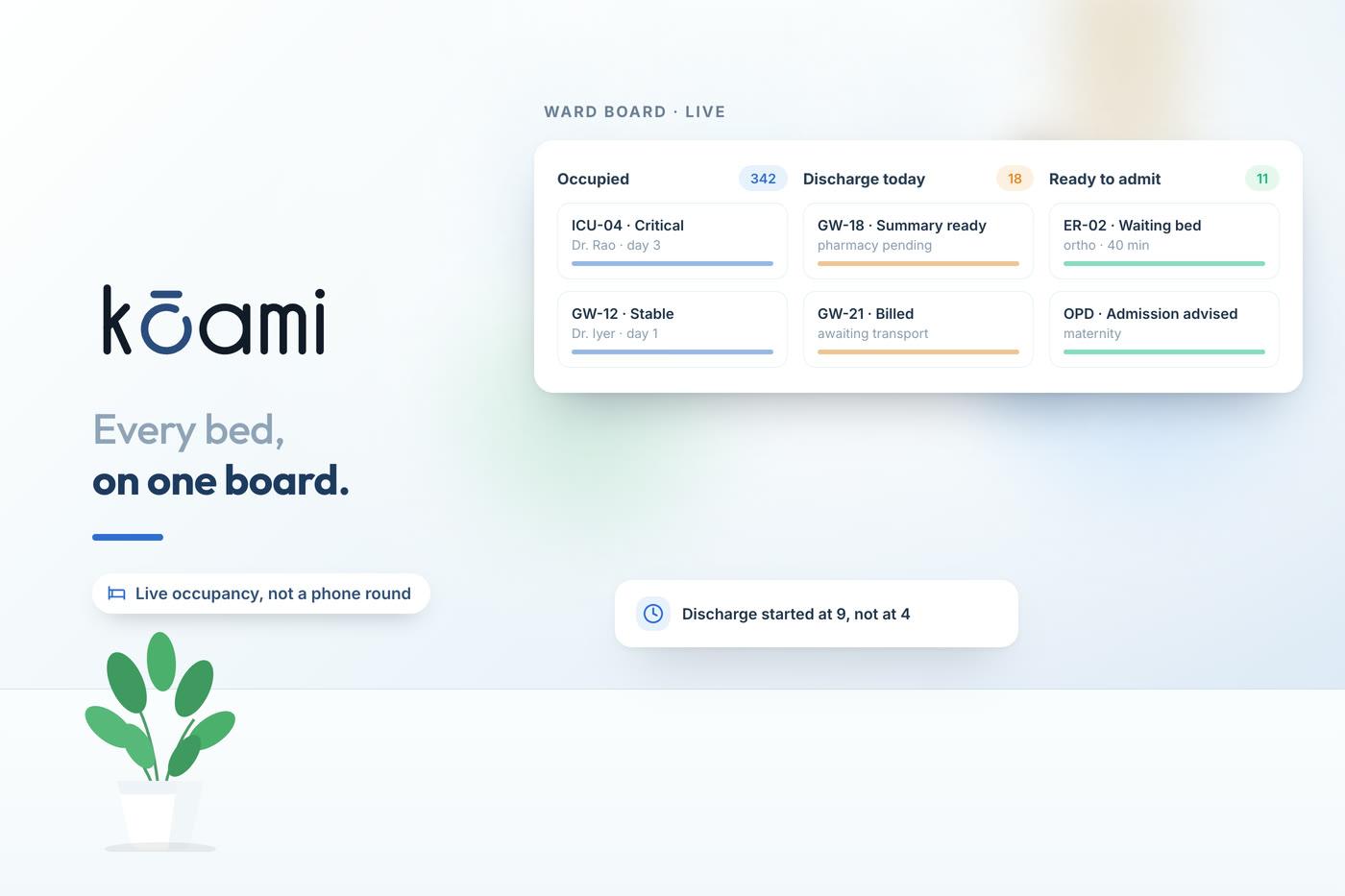
Ask a bed manager how many beds are free right now and you will often get a pause, a phone call, and a number that is already wrong by the time it is spoken. The bed board on the wall said one thing at eight this morning; the ward knows another; the emergency department, holding patients on trolleys, is working from a third. A bed that a system marks as occupied may have been vacated an hour ago and not yet cleaned; a bed marked free may already be promised to a transfer nobody logged. Bed management is the circulatory system of a hospital, and when the picture is stale, everything downstream - admissions, transfers, discharges, the emergency department's ability to breathe - runs on guesswork. Getting it right is less about counting beds and more about keeping the count true, minute by minute, as patients move.
The problem is not beds, it is truth
Most hospitals do not have a bed-counting problem. They have a bed-truth problem. The physical beds are there; what is missing is a single, current, trustworthy statement of their state. When the information lives in a whiteboard, a ward register, and several people's heads, it drifts out of sync the moment anyone moves.
The states a bed can be in are not just "full" and "empty." A useful picture distinguishes:
- Occupied - a patient is in the bed now.
- Ready - clean, made up, and available to admit immediately.
- Vacated but dirty - the patient has left, the bed needs turning over before reuse.
- Blocked - out of service for maintenance, isolation, or infection control.
- Reserved - held for a known incoming admission or transfer.
A bed marked simply "free" hides all of this. The emergency department cannot tell an immediately-usable bed from one that is still dirty, so it either waits unnecessarily or sends a patient to a bed that is not actually ready. Kōami tracks these states distinctly, so "free" means genuinely ready, and the difference is visible rather than assumed.
ADT as the single source of movement
Every change in bed state comes from a patient movement, and those movements have a name: admission, discharge, and transfer - ADT. If bed status is updated separately from the ADT events that cause it, the two will always disagree. The only reliable design is to make the movement drive the status, so they cannot diverge.
A bed board is only as honest as the last movement someone remembered to log. Tie it to ADT and honesty stops depending on memory.
When an admission is recorded, the bed becomes occupied automatically. When a transfer is ordered, the origin bed enters turnover and the destination is reserved. When a discharge completes, the bed moves to vacated-but-dirty and a housekeeping task is raised. Because Kōami drives bed status directly from ADT, the board reflects reality as a consequence of the movements that were going to be recorded anyway, not as a second, easily-forgotten step. The nurse does not update the bed board; the act of admitting the patient updates it.
Closing the loop with housekeeping
The gap that costs hospitals the most is the one between "patient discharged" and "bed ready." A discharged patient does not free a bed; a cleaned bed does. In many hospitals that turnover is a phone call away from happening, which means it happens late, and beds sit dirty and unusable while patients wait for them.
Making the loop automatic changes the economics of the whole ward:
- A completed discharge raises the cleaning task the instant it happens, not when someone calls.
- Housekeeping sees the queue of beds to turn over, prioritised by demand.
- When cleaning is marked done, the bed flips to ready and re-enters the live count immediately.
- The admissions and emergency departments see that readiness the moment it exists.
That closed loop is where the waiting-for-a-bed problem is actually solved. The bed that a discharge freed at eleven becomes a bed the emergency department can use at half past, because the turnover was triggered, tracked, and reported without a single chase-up call. Kōami connects discharge, housekeeping, and the live bed count so the handoff carries itself.
Occupancy you can act on, not just admire
Bed occupancy is one of the most quoted numbers in hospital management and one of the least useful when it arrives a day late. A monthly average occupancy figure tells the board something; a live occupancy view tells the operations team what to do in the next hour. The two are different tools, and the live one is where daily decisions get made.
A real-time picture lets the bed manager act before a squeeze becomes a crisis. When occupancy in one ward crosses a threshold, it shows now, while there is still time to expedite a discharge, open a flexed bed, or redirect an admission. When the emergency department is holding patients, the bed manager can see exactly which beds are close to ready and push the turnover on those specifically. Occupancy broken down by ward, by specialty, and by bed type turns a single blunt percentage into an actionable map. Kōami keeps this view current so the number is a lever, not a postmortem.
The whole patient journey, one connected flow
Bed management does not live alone. It is the hinge between admission and discharge, and it only works when it is connected to both. The discharge that frees a bed, the OPD or emergency admission that fills one, the transfer between wards, the housekeeping turnover - these are not separate systems that need reconciling. They are one flow of the patient through the hospital, and the bed state is simply the visible trace of that flow.
When they are connected in one ecosystem, the benefits compound. An earlier-initiated discharge frees a bed sooner, which the emergency department sees sooner, which shortens someone's wait on a trolley. A transfer logged properly keeps two wards' counts honest at once. The bed board stops being a thing someone maintains and becomes a thing the hospital's own movements keep true. That is the real goal of live bed management: not a perfect count for its own sake, but a hospital that always knows where its next bed is coming from - and can act on that knowledge while it still matters.
Follow Kōami on LinkedIn
Get the next guide on hospital operations, software and compliance in your feed, as soon as it is published.