Why Discharge Takes So Long - and How to Fix It
Published
Discharge is the part of a hospital stay that patients remember with the least fondness, and often for the most avoidable reasons. The doctor said "you can go home today" at half past ten in the morning. It is now four in the afternoon, the bed is still occupied, the family has taken a day off work, and nobody can quite say what everyone is waiting for. Meanwhile, downstairs in the emergency department, a patient who needs that exact bed is waiting on a trolley. Discharge delay is not a comfort problem. It is a capacity problem wearing a comfort problem's clothes, and it is almost always caused by process, not by clinical need.
The morning the decision is made
The decision to discharge is a moment. The discharge itself is a chain of tasks, and the gap between the two is where the hours disappear. Once a consultant marks a patient fit to leave, a surprising number of separate things have to happen, usually in sequence, usually owned by different people who cannot see each other's progress:
- The discharge summary has to be written, reviewed, and finalised.
- Pending investigations have to be chased, resulted, and acknowledged.
- Take-home medication has to be prescribed, dispensed by pharmacy, and counselled.
- Final billing has to be assembled, including charges that are still being posted.
- Insurance or scheme approval has to clear the final amount.
- Someone has to physically confirm the bed is vacated so housekeeping can turn it over.
Any one of these can stall the whole thing, and because they are handed off by phone call and paper, nobody has the full picture. The nurse thinks pharmacy is the holdup. Pharmacy is waiting on the summary. The summary is waiting on a lab result that came back an hour ago but nobody saw. This is the ordinary anatomy of a six-hour discharge.
Initiate discharge early, not at the end
The single most effective change is to treat "initiate discharge" as an action taken on ward rounds, not a status that appears when the patient is already dressed and waiting. When the treating team flags a likely discharge the evening before, or first thing on the round, every downstream station gets a head start.
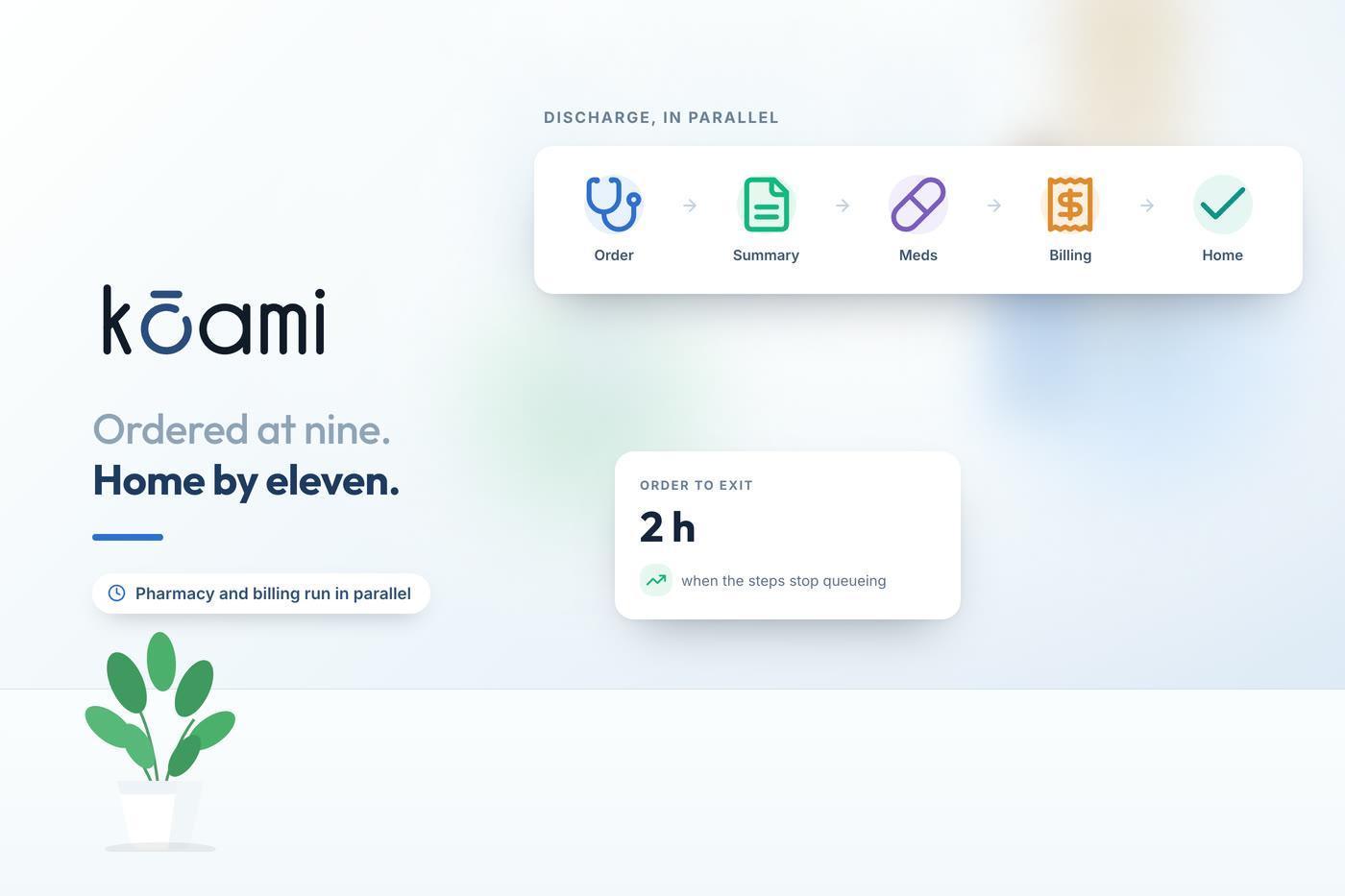
In Kōami, initiating discharge fans the work out in parallel rather than in series. The pharmacy sees the take-home prescription forming and can pre-pack it. Billing begins assembling the final statement while the patient is still on the ward. The nurse gets a checklist of what remains outstanding, item by item, instead of discovering the gaps at the last minute.
Discharge should be a countdown that everyone can see, not a surprise that lands on the ward clerk at 3 p.m.
That shift - from sequential to parallel, from silent to visible - is where most of the recovered hours come from. Nothing about the clinical care changes. The care was already done. What changes is that the administrative tail stops being run one baton-pass at a time.
The discharge summary as a shared, living document
The discharge summary is both a clinical handover and a bottleneck. When it lives in one doctor's head until the last moment, it holds up medication, follow-up, and the patient's own understanding of what happens next. When it is built up through the stay, it is nearly finished by the time discharge is called.
A good system lets the summary accrue: the diagnosis, the course of treatment, the medications, and the follow-up plan populate as they are decided, drawing on data already captured in the record rather than being retyped. The consultant reviews and signs rather than authoring from a blank page. Kōami keeps the summary connected to orders, results, and prescriptions, so the take-home medication list and the follow-up appointment are not re-entered by hand into three places.
Two practical wins follow. First, the patient leaves with a document that is actually complete and legible, not a hurried scrawl. Second, the follow-up loop closes, because the summary can trigger the follow-up booking and, where relevant, feed the patient portal so the family has the instructions after they get home.
Billing and approvals that keep pace
Money is the quiet reason discharges stall past clinical readiness. Final billing cannot close until every charge is posted, and charges trickle in from pharmacy, from the last round of investigations, from consumables used that morning. If billing only starts assembling when discharge is called, it is starting from behind.
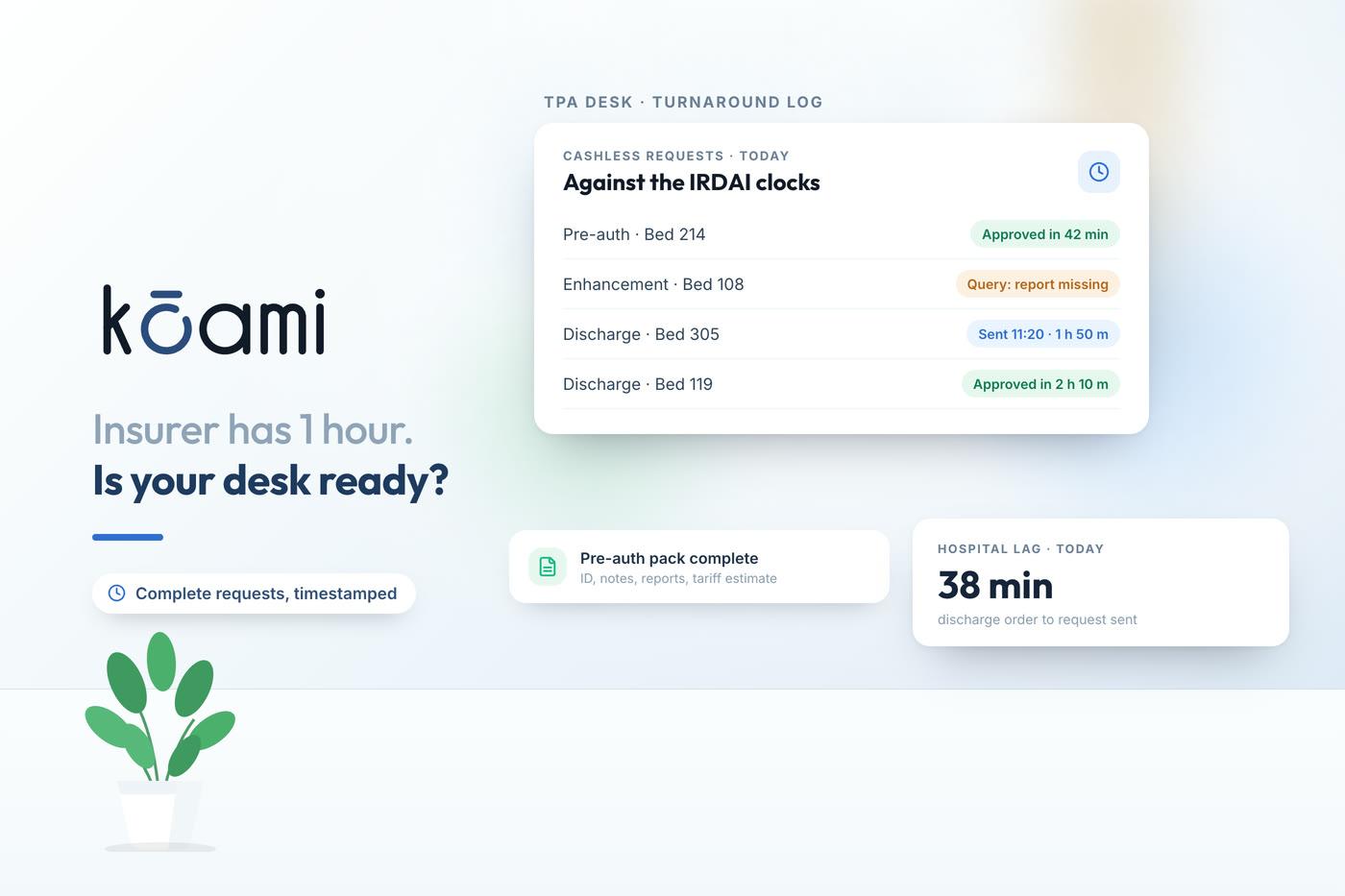
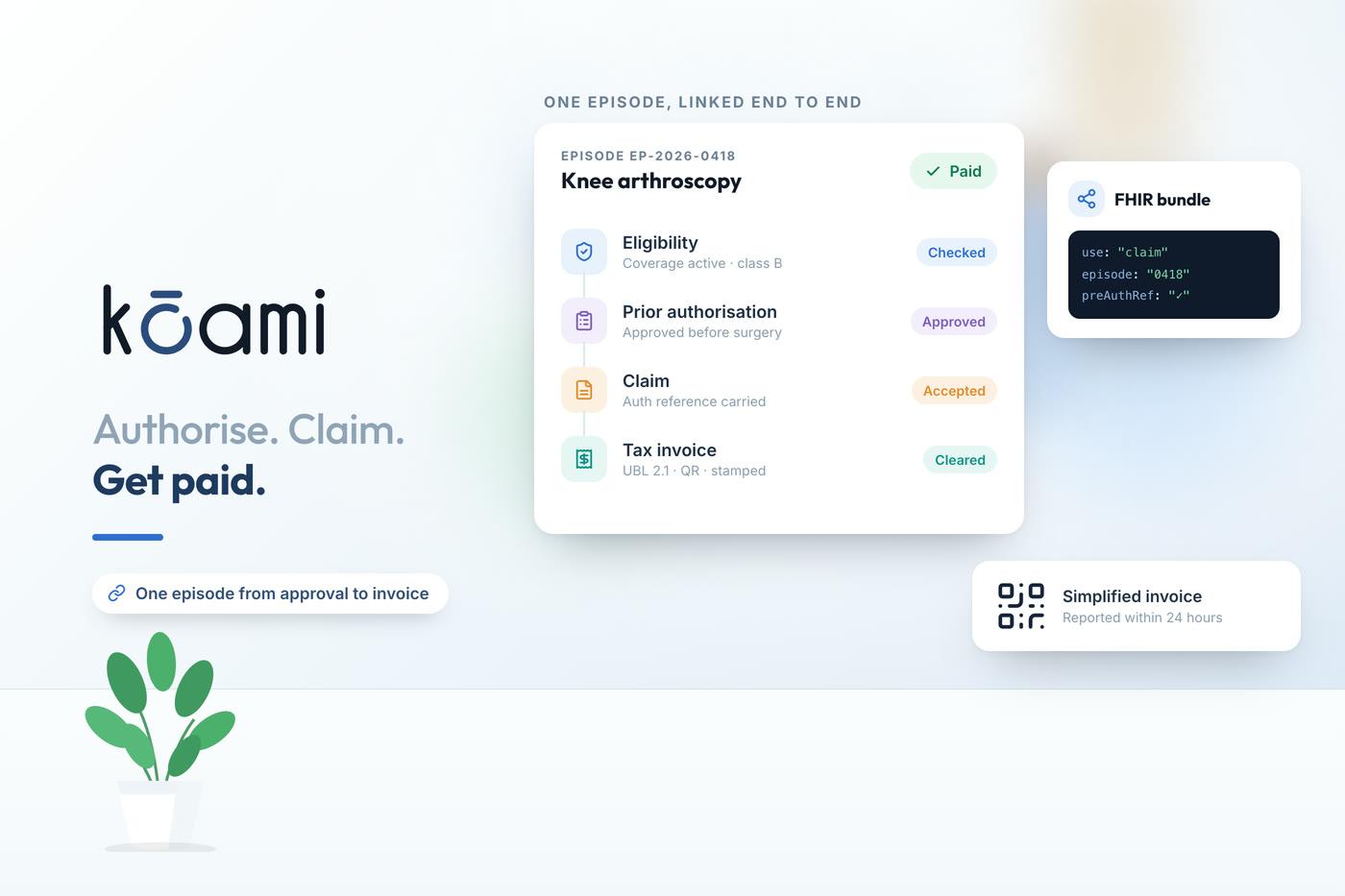
The fix is to keep the bill live throughout the stay so that at the moment of discharge only the final few items remain to be reconciled. Where an insurer or scheme is involved, the approval workflow should run alongside, not after, so the pre-authorisation and the final settlement are not a fresh negotiation at 3 p.m.
- Keep charges posting in near real time so the final bill is minutes of work, not hours.
- Surface the outstanding-charge list to billing before discharge is called.
- Run payer approval in parallel with clinical clearance, not after it.
- Give the ward a single view of billing status so the nurse can answer the family honestly.
When billing keeps pace with care, the financial step stops being the thing that adds two hours to an otherwise finished discharge.
Turning the bed over on purpose
The last mile is physical. A patient marked as discharged in the system but still in the bed is not a freed bed. Housekeeping needs to know the room is vacated, turn it over, and mark it ready, and the admissions or bed-management desk needs to see that readiness the moment it happens. Without that loop, beds sit "discharged but dirty" for an hour while the emergency department queues.
Kōami connects the discharge event to bed status and the ADT flow, so a completed discharge triggers the cleaning task and, when the room is ready, releases the bed back into the live count. The waiting patient downstairs moves up not because someone made a lucky phone call, but because the system carried the handoff.
Fixing slow discharge is not about pushing people to hurry. It is about starting earlier, working in parallel, keeping the summary and the bill alive through the stay, and closing the loop on the bed. Do that, and "you can go home today" starts to mean today - by lunchtime, not by dusk.
Follow Kōami on LinkedIn
Get the next guide on hospital operations, software and compliance in your feed, as soon as it is published.