Hospital Billing Software for Nepal: What to Test Before You Buy
Published
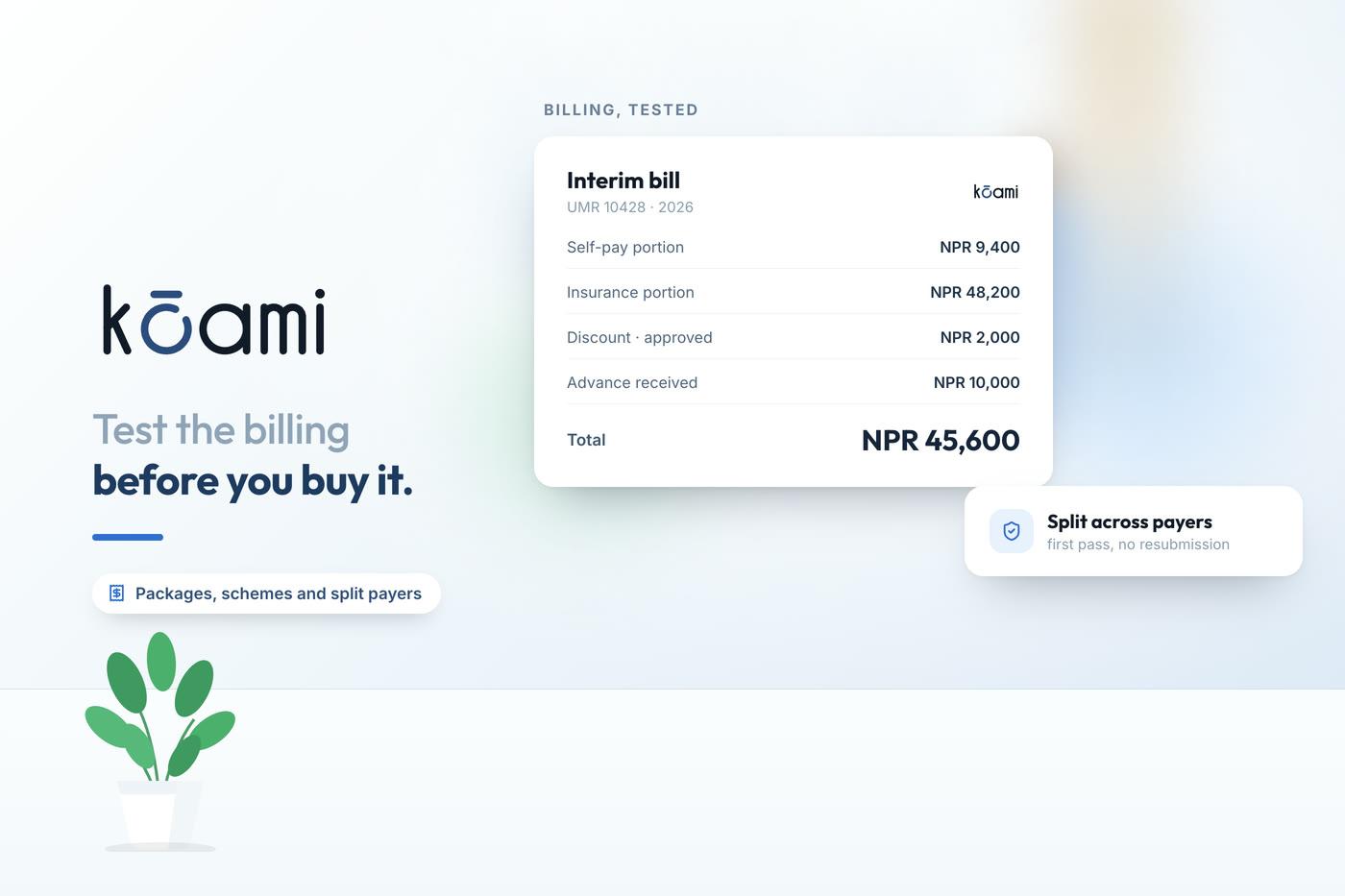
Hospital billing software in Nepal has to do more than print a receipt in Nepalese rupees. It must price the care recorded across OPD, wards, theatre, laboratory, imaging and pharmacy, apply the right tariff or package, preserve every correction and produce outputs that finance, patients and payers can trust.
Most billing delays are not typing delays. They are waiting for departments to post services, resolve package boundaries, return medicines or approve discounts. The best billing design removes those handoffs by making a charge part of the clinical or stock event that created it.
What should hospital billing software in Nepal include?
It should cover cash, credit, sponsor and insurance episodes without maintaining separate patient bills.
- NPR tariffs by service, department, payer, sponsor and effective date
- OPD invoices, deposits, interim IPD bills and final settlement
- Packages with defined inclusions, exclusions and overstay rules
- Split responsibility between patient, insurer, employer or other sponsor
- Pharmacy, consumable, laboratory and imaging charges from source events
- Refunds, reversals, credit notes and discounts with approval and audit trails
- Daily collection, cashier closure, receivables, adjustments and settlement reports
Ask the vendor to show a correction after payment. The reversal should update the patient balance, cashier record and any linked stock movement without deleting history.
How should local invoice and fiscal requirements be tested?
With documents approved by the hospital’s Nepal finance adviser, not a generic country template.
Bring the exact invoice, receipt, credit note and fiscal-period reports used today. Confirm NPR rounding, numbering, taxpayer and facility details, the treatment of taxable and exempt lines where applicable, and the required date formats. If the hospital uses Bikram Sambat dates operationally, test entry, display, print, sorting and fiscal rollover rather than assuming a translated label is enough.
Tax and electronic-billing rules can change. The contract should say who monitors Inland Revenue Department requirements, who configures a change, how it is tested and how quickly it reaches production. Software is not tax advice; the accepted format should come from the hospital’s finance and legal owners.
How does connected billing reduce leakage?
By capturing a charge when the service or item moves.
A lab order can create the applicable charge; a pharmacy dispense can reduce stock and post to the bill; theatre consumption can attach to the procedure; a cancelled service can reverse through the same chain. The alternative is a billing clerk phoning six departments at discharge and asking what happened.
Track late postings — charges entered after the discharge decision — by department and reason. That count is a direct measure of billing leakage and discharge delay. The methods in cutting hospital billing time apply regardless of country.
How should insurance and package billing work?
The system should separate clinical truth, price and payer responsibility.
The patient record says what care occurred. The tariff or package prices it. The payer rules determine who owes which portion and what evidence is needed. Keeping those layers separate lets a hospital change a tariff without changing an old clinical record, and reconcile a payer adjustment without rewriting the bill.
For Nepal’s Health Insurance Board, validate the current beneficiary, service, evidence, claim and settlement workflow with HIB and the facility. Read the detailed HIB claims HMIS guide before accepting an “insurance-ready” claim.
What should a billing demo include?
Ask for the difficult cases, not the clean cash OPD bill.
Run an admission with a package, an excluded medicine, a mid-stay transfer, a deposit, a sponsor contribution, a returned pharmacy item, an approved discount and a partial payer settlement. Then produce the patient bill, payer claim view, cashier close, receivable and audit trail.
Time the common counter path at realistic concurrency. A feature-rich system that makes every cashier wait two seconds between fields will create a queue at 9 a.m.
Where does Kōami fit?
Kōami Hospital ties billing to registration, orders, pharmacy, stores, wards and discharge. Kōami Inventory supplies the batch and stock ledger behind medicines and consumables.
Nepal invoice, tax, fiscal and payer configuration must be confirmed during discovery and acceptance. Bring the real documents to a billing workflow demo; the output should be a gap list, not a promise that every local rule is already covered.
Follow Kōami on LinkedIn
Get the next guide on hospital operations, software and compliance in your feed, as soon as it is published.