Health Insurance Board Claims: What a Hospital HMIS Must Track
Published
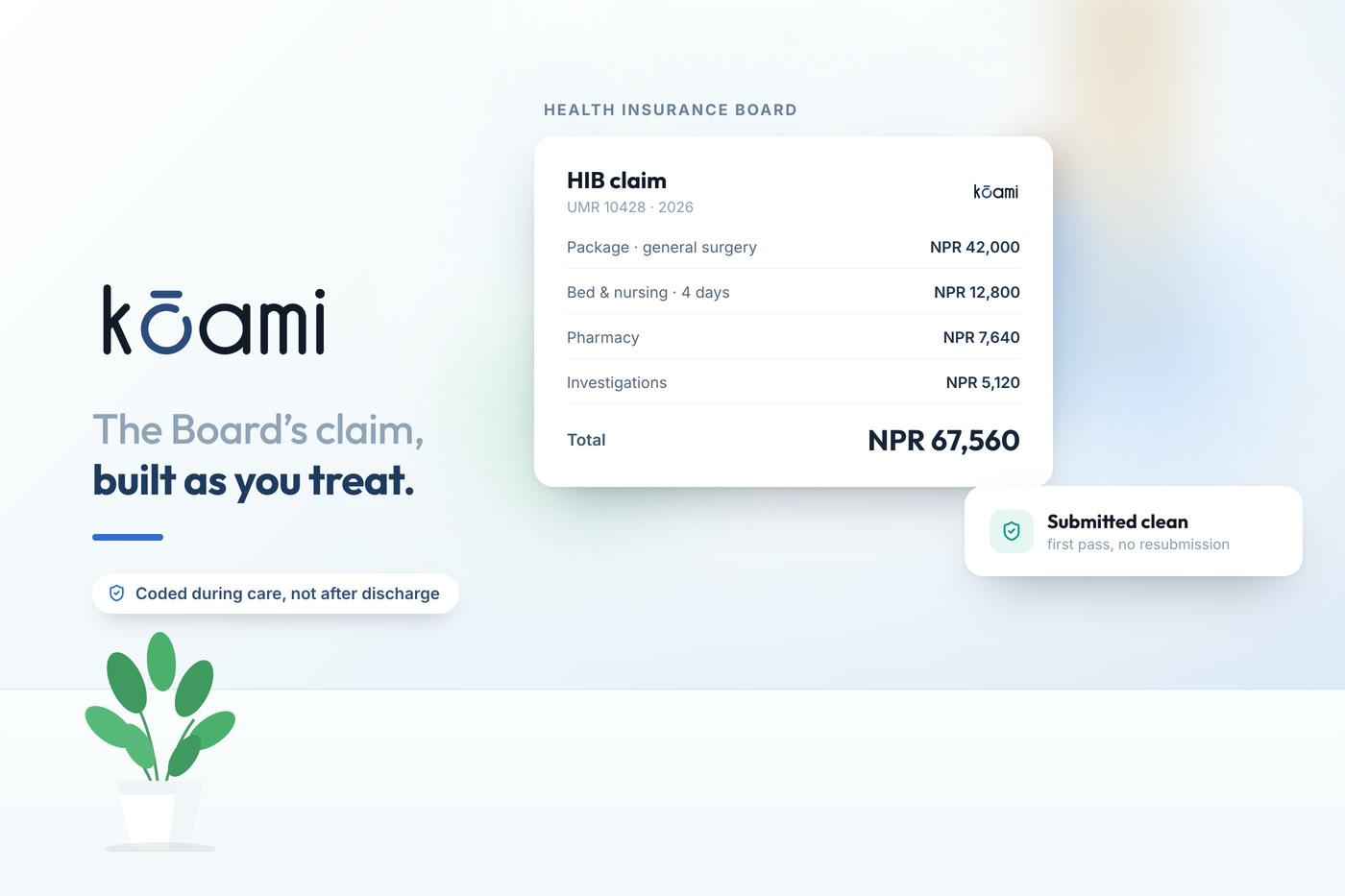
A health-insurance claim is not created at discharge. It begins when the beneficiary is identified and the planned service is checked, continues through every documented service, and succeeds only when the evidence, submission, query and settlement all refer to the same episode.
When the insurance desk keeps a separate register from registration, pharmacy, diagnostics and billing, staff spend the claim reconstructing care that the hospital has already delivered. A connected HMIS should make the claim a view of the patient episode rather than a second version of it.
Where does a Health Insurance Board claim begin?
At patient identification and eligibility, before avoidable financial assumptions are made.
The hospital needs to associate the beneficiary and relevant insurance details with its own MRN without creating a duplicate patient. Staff then need a visible record of the applicable benefit, referral or authorization requirement and facility-specific process. Rules and benefit packages change, so the live Health Insurance Board source must outrank a software default.
The Board publishes current documents and benefit information on its official site. Its benefit package notes mandatory IMIS documentation for claim reimbursement in covered contexts; hospitals should confirm the current version and operational guidance directly with HIB.
What evidence should the HMIS collect?
Evidence should be captured as care happens and attached to the episode it supports.
That can include registration and beneficiary details, referral or authorization records, clinical notes, diagnoses, orders and results, procedure notes, medicines, itemized services, discharge summary and required attachments. The exact set depends on current HIB rules and the service.
The system should show missing evidence before discharge, not after submission. A checklist is useful only if each item links to the real document or structured event and records who completed it. Uploading everything into one undifferentiated folder simply moves the search from paper to a screen.
How should queries and rejected claims be managed?
As a named work queue with deadlines and root causes.
Every claim needs a status, owner, last action, next action and ageing. Queries should record the question, due date, response and attachments. Rejections need categories such as eligibility, referral, benefit, coding, missing documentation, inconsistency or submission error. Without categories, management sees a backlog; with them, it sees which upstream process to fix.
The openIMIS manual used by Nepal’s HIB implementation shows the importance of correctly classifying claims and care settings inside the insurance system. An HMS interface should therefore preserve the identifiers and meanings needed for reconciliation rather than flattening everything into a generic payer bill.
How should settlements be reconciled?
At claim and adjustment level, not only as one bank receipt.
A batch payment can cover many claims, with some fully paid, some adjusted and some excluded. Finance needs to match the receipt to individual claims, post deductions with reasons, reopen unresolved balances and produce ageing by status. Otherwise the ledger can show money received while the claims team cannot explain what remains due.
Track four intervals: discharge to submission, query received to response, submission to decision, and decision to settlement. These identify delays the hospital controls separately from time spent with the payer.
What should a vendor demonstrate?
Use one completed and one queried case from your facility, with identifying data removed.
Ask the vendor to register the beneficiary, record covered services, show missing evidence, assemble the claim view, receive a query, attach a response and reconcile a partial settlement. Confirm how current HIB or IMIS rules are updated and who owns interface failures.
Do not accept “insurance module available” as evidence. Ask to see the claim move.
How does Kōami support the workflow?
Kōami Hospital connects registration, clinical documentation, orders, pharmacy, billing and discharge, so the evidence originates on one episode. It can support insurance worklists, documents, query tracking and settlement reconciliation.
The exact HIB electronic interface and the currently applicable claim rules require verification during a Nepal implementation. That boundary belongs in the proposal, along with test cases and responsibility for future changes. Bring a real de-identified claim to a workflow demo.
Follow Kōami on LinkedIn
Get the next guide on hospital operations, software and compliance in your feed, as soon as it is published.