Triage That Reads the Worklist Before You Do
Published
A radiology worklist at 8am is a wall of studies stacked in the order they arrived. The chest CT that will change someone's afternoon sits three rows below a routine follow-up that can safely wait until lunch. First-in-first-out is fair, but fairness and urgency are not the same thing. AI triage does something quietly powerful: it reads the worklist before the radiologist does, and reorders it so the study that matters most is the one waiting at the top.
The worklist is not a queue, it is a risk pile
Most PACS worklists are sorted by time, modality, or referring location. That is easy to build and easy to defend, but it assumes every study carries the same clinical weight. It does not. A non-contrast head CT flagged from the emergency department may hold a bleed that needs a call to the on-call team within minutes. The same list holds surveillance scans where a day's delay changes nothing. When these are interleaved by arrival time alone, the urgent study depends on luck: whoever happens to open it first.
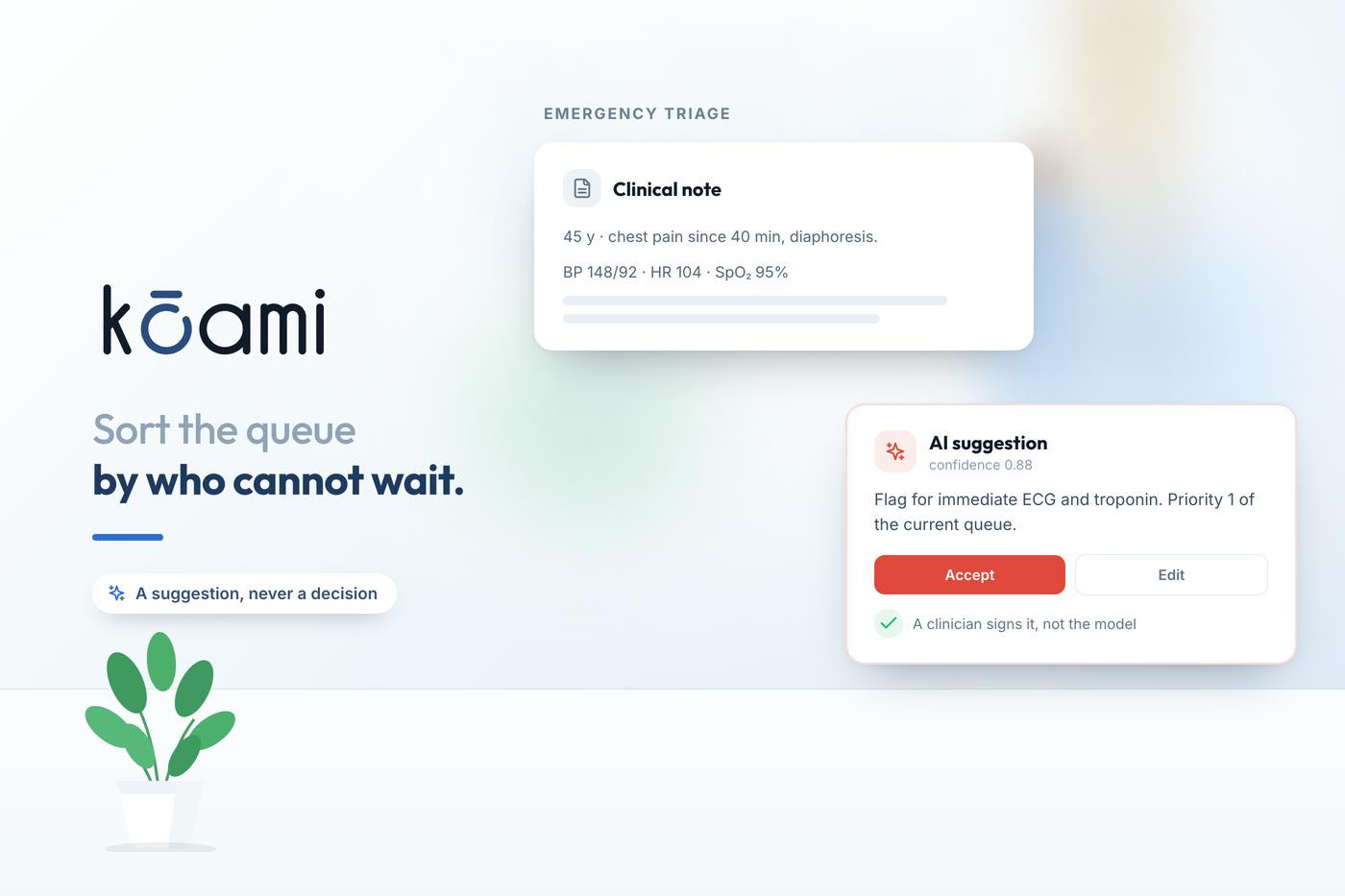
Triage models change the sorting key from when to how urgent. They pre-read incoming studies as they land on PACS and attach a priority signal, so the worklist reflects clinical risk rather than clock order. The radiologist still reads everything. They just read the frightening things first.
Reading pixels and context together
A useful triage layer does not look at the image alone. It combines the DICOM pixel data with the metadata and the request context that already travel with the study.
- The image findings themselves, for example a suspected large-vessel occlusion or a pneumothorax
- DICOM tags: modality, body part, contrast, and the referring source
- The clinical question on the request, which separates a trauma scan from routine imaging
- Where the order came from, since an ED or ICU origin carries different urgency than an OPD follow-up
- Patient flags already in the EMR, such as a recent stroke pathway activation
Pulling these together matters because pixels without context mislead. A small effusion is unremarkable in one patient and a red flag in another. When the triage layer in Kōami's imaging stack reads the study through WADO alongside the order details, the priority it assigns reflects the whole picture, not just the greyscale.
Triage does not tell the radiologist what to think. It tells them what to look at next.
Sensitivity is the whole game
For a triage tool, the costly error is the miss. If the model quietly downgrades a genuine emergency, it has actively caused harm by burying the study deeper in the list. So these systems are tuned to favour sensitivity: when unsure, escalate. That means accepting more false alarms in exchange for catching the true ones.
The trade is only acceptable if false positives stay cheap. Escalating a study that turns out to be normal costs a few minutes of a radiologist's attention. Because the radiologist reads every study regardless, an over-cautious flag does not remove anyone from care; it only nudges the reading order. The design principle is simple to state and hard to violate: triage may reorder the worklist, but it must never remove a study from it or mark anything as safe to skip.
Where it changes turnaround time
The metric that improves most visibly is TAT, and specifically the tail of the distribution. Average turnaround can look fine while a handful of critical studies wait far too long because they landed behind a batch of routine imaging. Triage attacks that tail directly.
Concretely, the workflow shifts in a few ways:
- Critical studies surface at the top of the worklist within moments of hitting PACS
- The on-call radiologist covering several sites sees the most urgent study across all of them, not just the newest at each
- Overnight, when one person may cover a large volume, the ordering protects the cases that cannot wait for morning
- Referring teams get faster answers on the studies where speed changes management
The routine work still gets read, and gets read properly. It simply stops competing for pole position with the emergencies. Over a week, that is the difference between a stroke call going out in minutes and going out after a reader has ploughed through an unlucky backlog.
Trust comes from being legible and auditable
A radiologist will not hand their reading order to a system they cannot question. So the triage flag has to explain itself and has to leave a record. Each prioritised study should carry the reason it was escalated and the confidence behind it, and every reordering should be logged so a department can review, weeks later, whether the tool helped or hindered on a given case.
That audit trail is not bureaucracy. It is how a department learns the model's blind spots, tunes its thresholds, and defends its workflow if a case is ever reviewed. It also keeps accountability where it belongs. The AI arranged the list; the radiologist made the diagnosis. Nothing about triage dilutes that line.
Triage is one of the least glamorous applications of clinical AI and one of the most defensible. It does not diagnose, it does not replace anyone, and it does not ask the radiologist to trust a machine with a patient. It just makes sure that when a busy reader sits down to a full worklist, the study that could not wait is already the one in front of them.
Follow Kōami on LinkedIn
Get the next guide on hospital operations, software and compliance in your feed, as soon as it is published.