Hotel Night Audit: The Process, Checklist and Reports, Step by Step
Published
At most hotels the night audit starts somewhere between midnight and two in the morning, is run by the most junior person on the payroll, and is the only process that touches every rupee the property earned that day. When it goes well, nobody notices. When it goes badly, the GM's morning report is wrong, a no-show is never charged, and a cashier's shortage is discovered three weeks later by the accountant.
This guide explains what the night audit is for, the steps in the order they should happen, the reports it should produce, and how software turns a two-hour manual close into a guided run.
What is a hotel night audit?
The night audit is the daily close of a hotel's books. It reviews the day's transactions, posts the charges that accrue overnight — principally the room night — reconciles cash and card collections, settles the status of guests who were expected but did not arrive, and then moves the hotel's business date forward to the next day.
The business date is the key idea. A hotel's day does not end at midnight; it ends when the audit closes it. Everything posted before the audit belongs to that business date, and the morning reports are built on it.
Why does the night audit matter?
Because it is the control point. It is where a missing room charge, an unsettled restaurant check, a folio over its credit limit or a cashier's variance is either caught or carried forward into the accounts. A hotel that skips or rushes it is not saving time; it is moving the reconciliation to a month-end when the guest has already left.
What are the steps in a night audit?
In this order, because each step depends on the one before it:
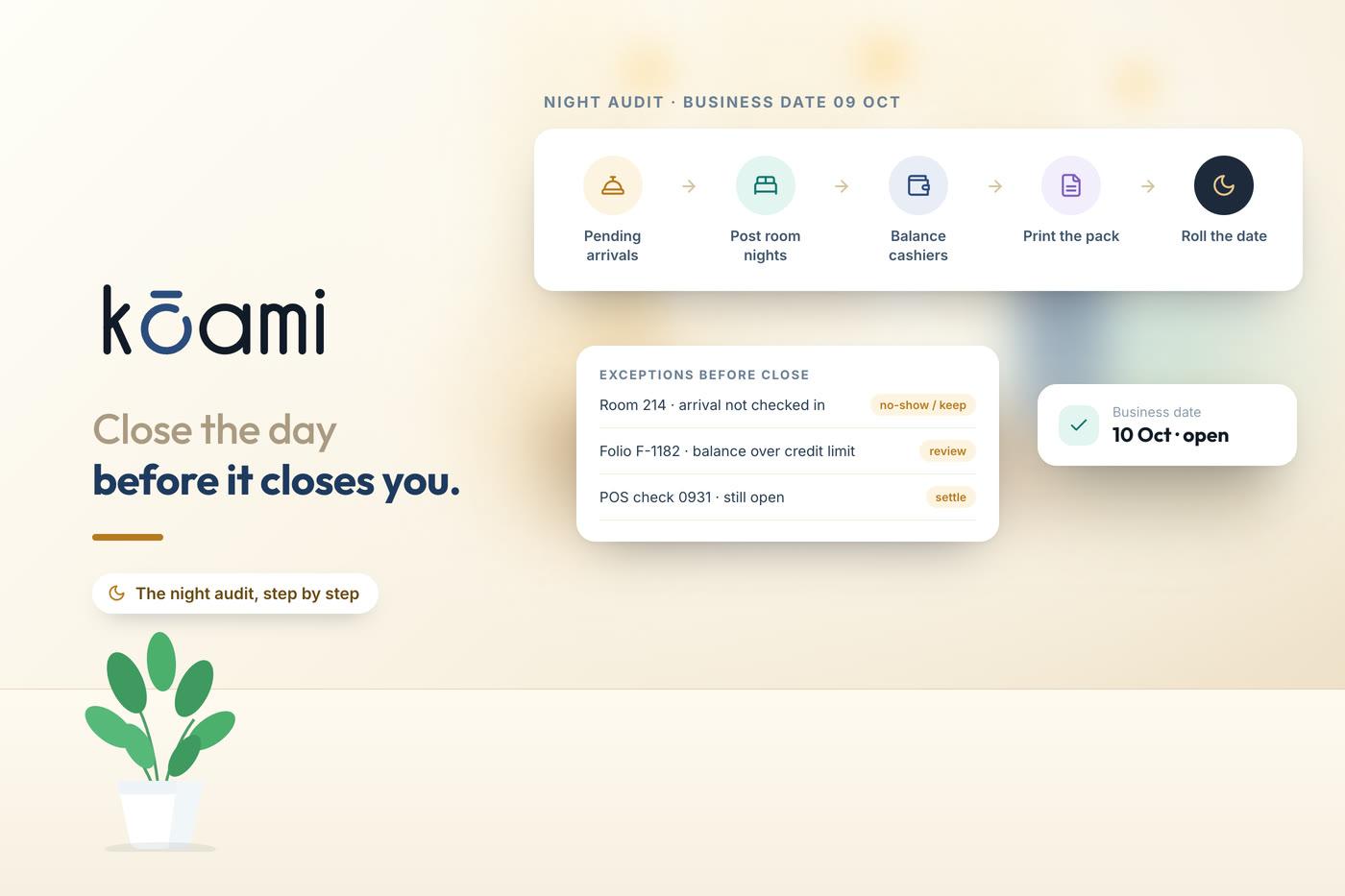
- Resolve pending arrivals. Every reservation due today that has not checked in is decided: mark it a no-show and charge the guarantee, keep it for a late arrival, or cancel it.
- Check in-house discrepancies. Compare the front desk's room status with housekeeping's report, so a room shown occupied but found vacant — or the reverse — is investigated before charges post.
- Close the outlets. Every restaurant, bar and room-service check is settled or posted to a room, so the day's F&B revenue is complete.
- Post room nights and inclusions. Room charges and any plan inclusions — breakfast in a bed-and-breakfast rate, for example — post to each in-house folio for the night.
- Review folios. Look for balances above credit limits, unpaid deposits, rate overrides and discounts that need approval.
- Balance the cashiers. Each shift's collections by tender — cash, card, UPI — reconciled against what the system says was taken, with variances recorded.
- Produce the reports. The night-audit pack, described below, printed or saved for the morning.
- Roll the business date. Only after everything above is done. Once rolled, the day is closed and new postings belong to tomorrow.
What reports should a night audit produce?
The pack the GM and the accountant read in the morning:
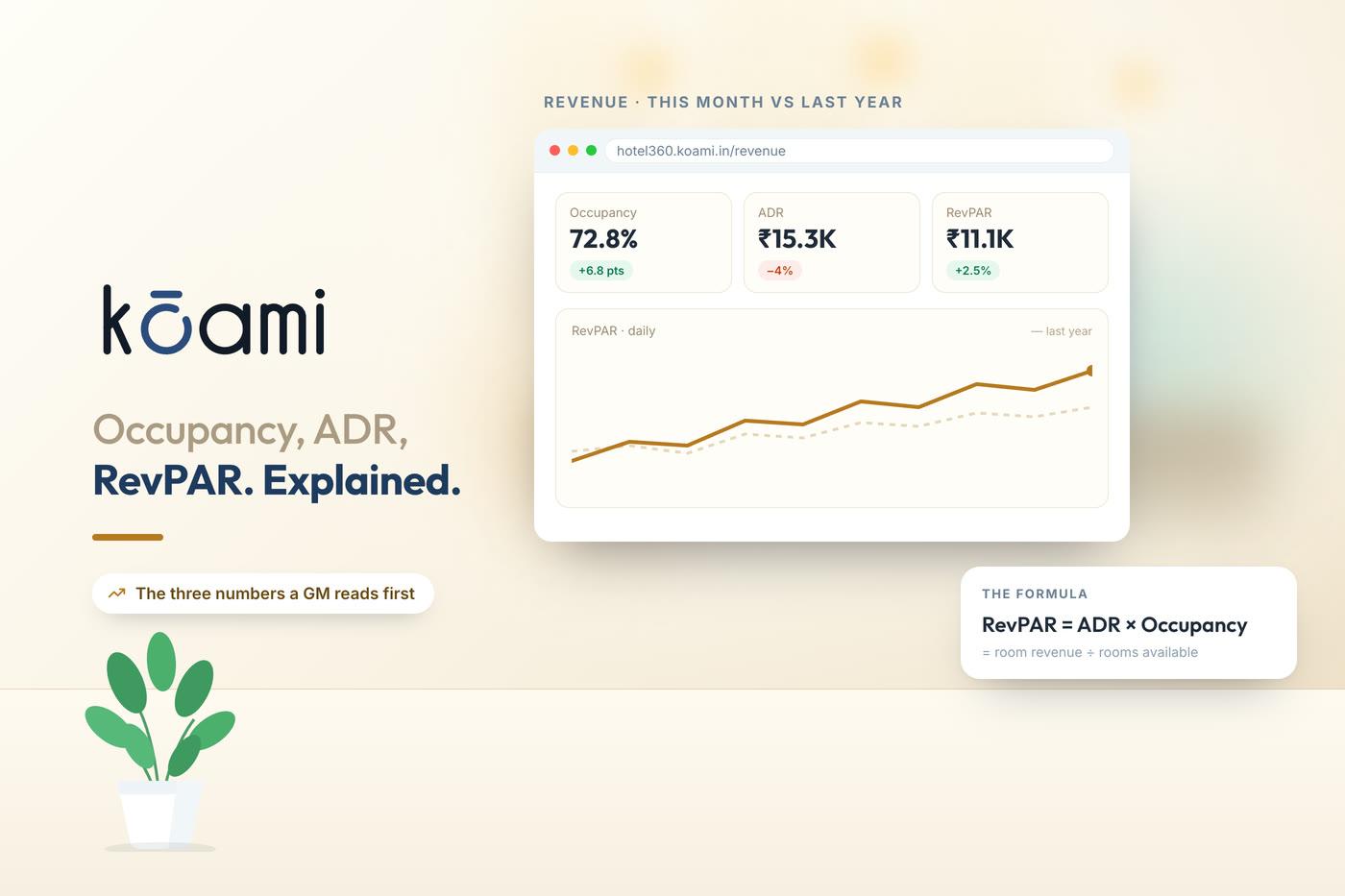
- Manager's flash report: occupancy, ADR, RevPAR and revenue by department for the day, month-to-date and against budget or last year.
- Revenue by department and by charge code.
- Payments by tender, and the cashier reconciliation with variances.
- Room status and discrepancy report.
- No-shows, cancellations and arrivals for tomorrow.
- Guest ledger (in-house balances) and city ledger movement.
- Discounts, overrides, voids and allowances, with who approved them.
How long should a night audit take?
On paper, with manual posting, a busy property can take two hours or more, and the time goes into re-keying and chasing. In a system where outlets post to rooms in real time and cashier shifts close in the system, the audit itself is a review of exceptions — often fifteen to thirty minutes, most of it spent on the few items that genuinely need a decision.
What goes wrong in a night audit?
The same few things, at most hotels:
- Restaurant checks still open, so F&B revenue is short and a guest checks out without the charge.
- No-shows not charged, because the guarantee was not captured or the decision was left to the morning.
- Room status disagreement, which is how a skipped or unrecorded stay goes unnoticed.
- Unapproved overrides, a rate or discount changed at the desk with no record of who allowed it.
- The date rolled too early, so late postings land on the wrong day and the reports never quite agree.
Can the night audit be automated?
Mostly, yes — and the parts that should not be automated are the decisions. Software can post room nights and inclusions, assemble the reports, balance cashiers against recorded collections and roll the date. What it should do is put each exception in front of the auditor — this arrival, this open check, this folio over its limit — and refuse to close until each one has been decided by a person whose name is recorded.
Where Kōami Hotel360 fits
In Kōami Hotel360 the night audit is a guided run. It lists pending arrivals for a no-show, keep or cancel decision, posts room nights and plan inclusions, rolls each property's business date independently, and prints a one-click night-audit pack. Because the restaurant POS, spa and minibar post to the room as they happen, the outlets are usually already complete when the audit starts; cashier shifts close with their float, variance and X/Z reports; and discounts, voids and write-offs pass through rules and approvals before they ever reach the audit.
For the numbers the audit produces, see our guide to occupancy, ADR and RevPAR, and for invoicing the stay correctly, GST on hotel rooms.
Follow Kōami on LinkedIn
Get the next guide on hospital operations, software and compliance in your feed, as soon as it is published.