Raising First-Pass Claim Rates
Published
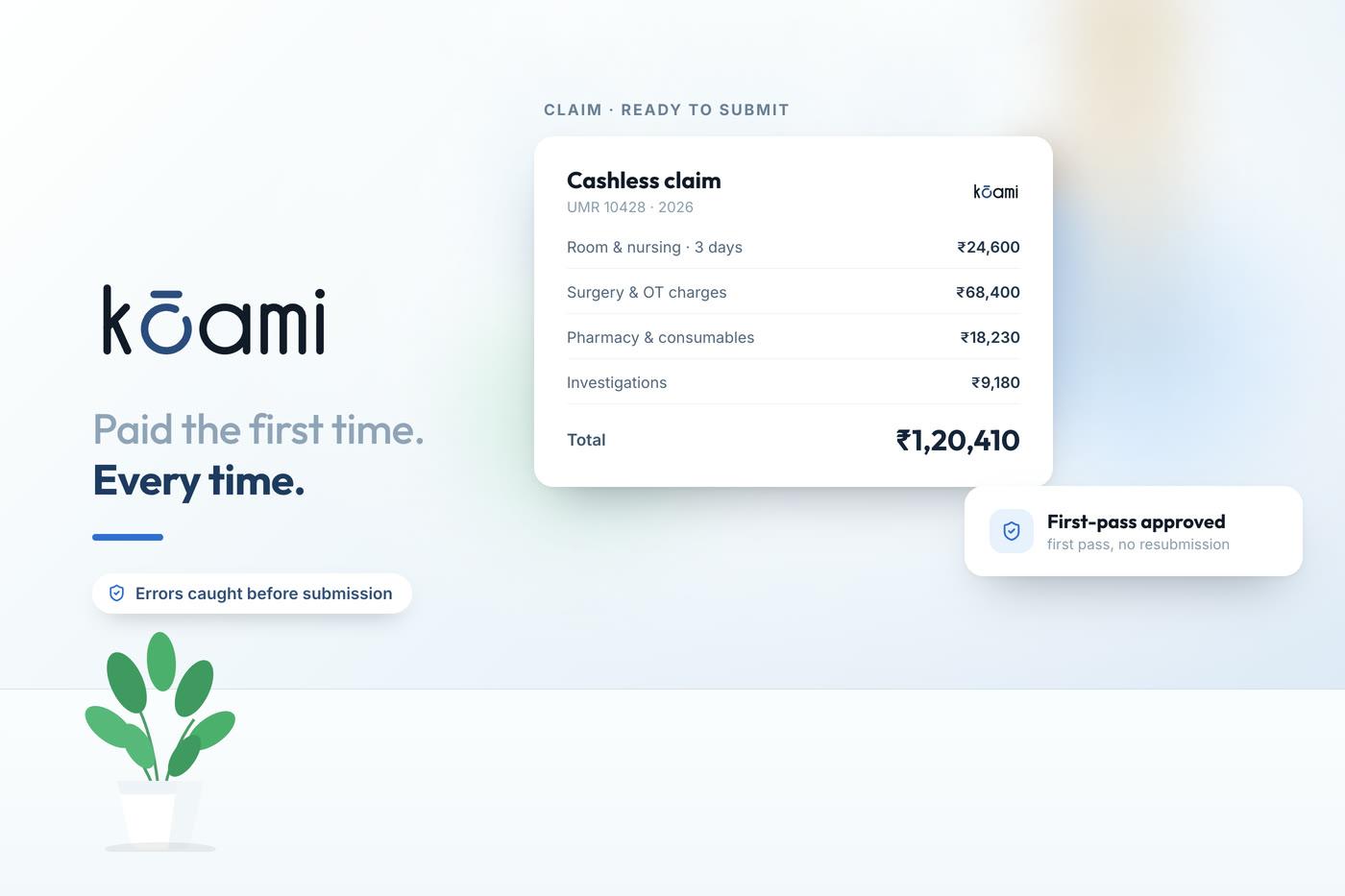
There is a number buried in every hospital's revenue cycle that quietly determines how much of the money it earns it actually collects, and how much it spends chasing what it earned. It is the first-pass claim rate: the share of claims that get paid on the first submission, without a rejection, a query, or a resubmission. A hospital with a high first-pass rate has cash arriving predictably and a small back office. A hospital with a low one has a growing pile of rework, a lengthening collection cycle, and a finance team that spends its days re-doing work that should have been right the first time.
Why Claims Fail, and Why It Is Rarely the Clinician
When a claim comes back rejected, the instinct is to blame the payer. Sometimes that is fair. Far more often the rejection was earned, at the point of registration or coding or documentation, by an error that was entirely preventable. Understanding the taxonomy of failure is the whole game, because different failures need different fixes.
- Eligibility failures - the patient's policy had lapsed, the treatment was not covered, the pre-authorisation was never obtained. These happen at the front desk, before any care is delivered.
- Data failures - a mismatched name, a wrong policy number, a missing TPA reference. Trivial to prevent, expensive to chase, and responsible for a startling share of rejections.
- Coding and documentation failures - a diagnosis that does not justify the procedure billed, a missing operative note, an unbundled charge. These originate in the clinical and coding workflow.
The pattern to notice is that most first-pass failures are born long before the claim is submitted. By the time the claim file is being assembled, the error is already baked in. Kōami's revenue-cycle tooling pushes the checks upstream, to where the errors are actually created, rather than catching them at the end when it is too late to fix cheaply.
Every rupee of denied claim was already earned once. Collecting it a second time costs you a second time.
Catch It at the Front Desk, Not the Back Office
The cheapest denial to fix is the one that never happens, and the front desk is where you prevent most of them. A registration clerk who verifies eligibility while the patient is standing there can resolve a lapsed policy or a missing pre-authorisation in real time. The same problem discovered a month later, after discharge, becomes a phone call to a patient who has left, a query to a TPA, and a claim in limbo.
- Verify eligibility at registration, so a coverage problem surfaces while it can still be discussed with the patient.
- Validate the payer and TPA details against the scheme's rules at entry, so a wrong policy number is caught by the field, not by the rejection three weeks later.
- Flag procedures that require pre-authorisation before they are performed, so the approval is obtained in advance rather than begged for in retrospect.
Kōami runs these validations at the point of entry, turning the front desk into the first line of revenue-cycle defence. It is far cheaper to stop a bad claim from forming than to rescue it once formed.
Scrub the Claim Before It Leaves
Between the assembled claim and the payer's inbox there should sit a scrubbing layer - a set of rules that inspects every claim against known payer requirements and holds anything that would predictably be rejected. This is the difference between submitting claims and lobbing them hopefully at a payer.
- Completeness checks, so a claim missing a mandatory field or document never gets submitted to be bounced.
- Consistency checks, so the diagnosis, the procedure, and the charges tell one coherent story rather than three contradictory ones.
- Payer-specific rules, because each TPA and scheme has its own quirks, and a rule engine remembers them all where a human reviewer cannot.
The rules are not static. Every genuine rejection is a lesson, and a claim that failed for a reason the scrubber did not catch should teach the scrubber a new rule. A hospital that feeds its denials back into its scrubbing logic watches its first-pass rate climb quarter over quarter. Kōami is built to make that feedback loop explicit, so the rule set gets smarter from the hospital's own history.
Work Denials as a System, Not a Chore
No first-pass rate reaches a hundred percent, and pretending otherwise is how denials rot. Some claims will come back, and the discipline is to work them as a managed queue with ownership and analysis, not as a demoralising pile someone gets to when they can.
- Categorise every denial by root cause, because the value of a denial is the lesson it carries about the failure that produced it.
- Route denials to the function that owns the fix - eligibility issues to the front desk process, coding issues to the coders - so the same mistake stops recurring.
- Track the denial rate by cause over time, so you can see whether the fixes are working and where the next biggest leak is.
Kōami treats denials as data, surfacing the patterns so that a hospital fixes the process that generates a category of denials rather than endlessly reworking individual claims. Rework is a symptom; the process that caused it is the disease.
Raising the first-pass rate is not a single project with an end date. It is a habit: catch errors where they are born, scrub every claim against what payers actually require, and treat every denial as a lesson rather than a nuisance. Each point of improvement is money that arrives sooner and a back office that shrinks instead of grows. In a sector where margins are thin and the work is hard, getting paid correctly the first time is one of the most humane efficiencies a hospital can build, because the alternative is spending clinical revenue on the administrative cost of collecting it.
Follow Kōami on LinkedIn
Get the next guide on hospital operations, software and compliance in your feed, as soon as it is published.