Pharmacy Management Software in Nepal: Stock, Expiry and Billing
Published
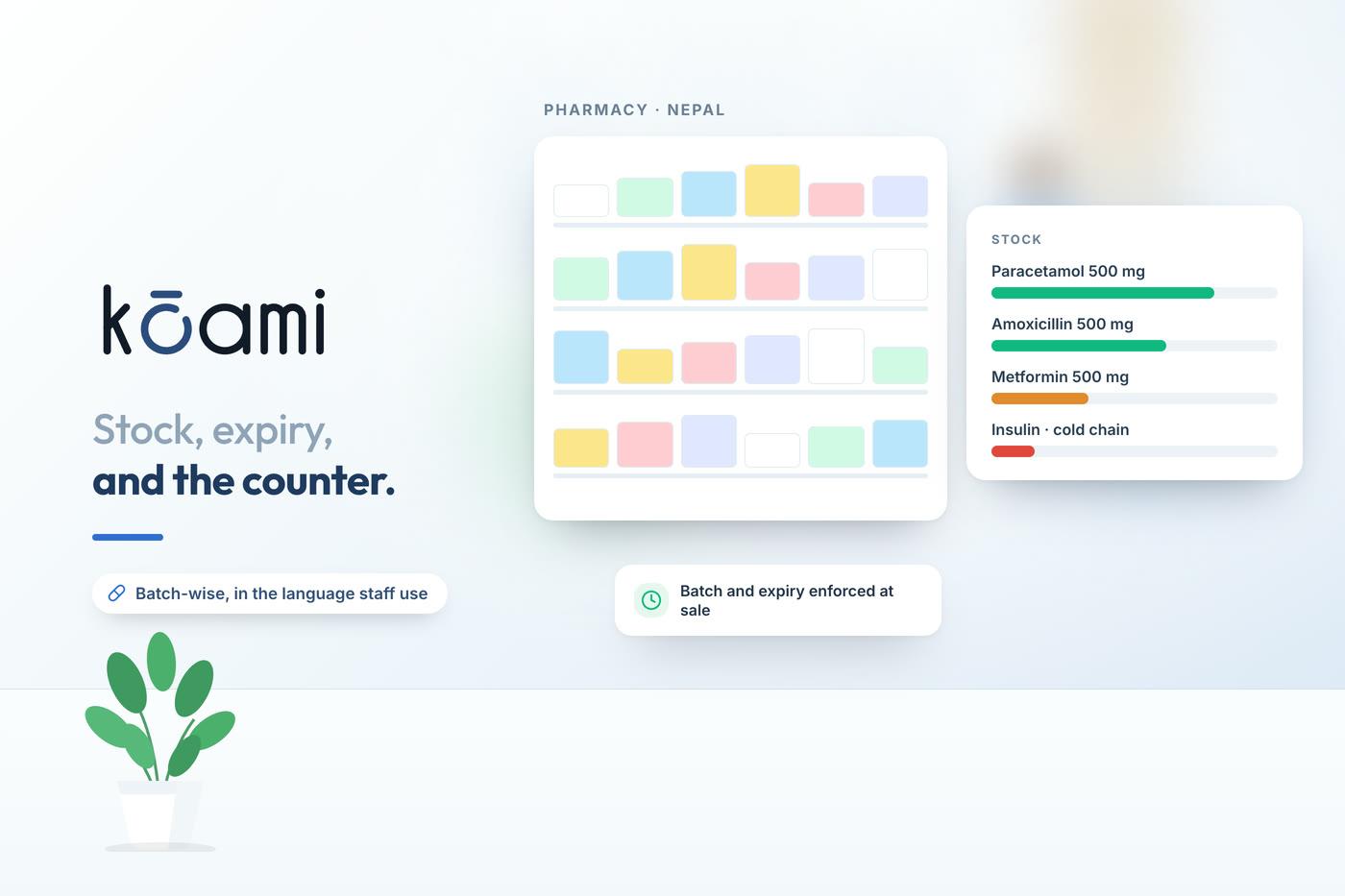
A hospital pharmacy in Nepal is simultaneously a clinical service, a store and a billing counter. Software that handles only sales misses inpatient indents, ward returns, batch recall, near-expiry stock, formulary control and the link between what was dispensed and what the patient was charged.
The central design principle is simple: one medicine movement should create one stock event and, where appropriate, one patient charge. Separate pharmacy and hospital systems turn that into reconciliation work at the end of every shift.
What should pharmacy software for a Nepal hospital include?
It should track medicines from purchase to patient with batch-level evidence.
- Item, generic, brand, strength, form and pack configuration
- Supplier, purchase order, receipt, batch, expiry and landed cost
- Multiple stores, sub-stores, wards and pharmacy counters
- FEFO suggestions, minimum levels and near-expiry worklists
- OPD sale, IPD dispense, indent, return, transfer and adjustment
- Prescription checks, substitutions and controlled approval where configured
- Patient billing, sponsor rules, cashier close and receivables
- Stock, valuation, consumption, margin, expiry and stock-out reporting
The vendor should show the ledger for one batch from receipt through transfer, dispense, return and adjustment. A current balance without that movement history is not an auditable inventory.
How does FEFO reduce expiry loss?
First-expiry-first-out helps only when the batch suggested by software is the batch physically picked.
Receiving must capture reliable expiry data; shelves should follow the same location logic; dispensing should suggest the earliest suitable batch; exceptions should be recorded. Near-expiry reports need action bands — return to supplier, transfer to a higher-use branch, prioritize where clinically appropriate, or write off with approval.
Measure expiry loss by value and reason, not just by item count. A few high-value medicines matter more than a box of low-cost supplies. The batch and expiry guide explains the operating discipline behind the screen.
How should wards and the pharmacy share stock?
Through indents, issues, consumption and returns on one ledger.
A ward request should be approved, issued against a batch and received by a named user. Patient-specific consumption should reduce the ward balance and post the applicable bill. Unused medicines should return through a recorded path that reverses the patient charge where policy permits. Emergency floor stock needs replenishment rules and periodic counts, not invisibility.
This is where standalone retail pharmacy software usually breaks. It can sell at a counter but cannot explain what is sitting in a ward cupboard or why an inpatient bill contains a medicine that came back.
What local configuration should be tested in Nepal?
Test NPR pricing, local purchase and sales documents, fiscal periods, supplier rules and the facility’s payer arrangements.
Hospitals should have finance and pharmacy owners approve invoice fields and tax treatment. Confirm how changes in maximum retail price, purchase cost and selling price affect existing batches. If dates are shown in Bikram Sambat for users or documents, test expiry sorting and alerts against the underlying date, because a formatting error must never change clinical stock rotation.
For insured patients, show how covered, excluded and patient-pay medicines are separated without keeping a second dispensing record.
Which pharmacy reports actually change decisions?
Start with reports that lead to a named action.
Near-expiry value by action window, stock-outs with lost-demand reason, days of stock, fast and slow movers, purchase-price variance, negative stock attempts, unbilled dispenses and gross margin are more useful than a hundred-page stock statement. Segment by store and branch so transfers can happen before new purchasing.
Reorder suggestions should be recommendations, not automatic orders. They need lead time, recent consumption, seasonality, minimum order quantities and clinical judgment.
What should a vendor demonstrate?
Use one medicine with two batches and different expiry dates.
Receive both, transfer one to a ward, dispense to an inpatient, return part, sell another at OPD, adjust a damaged unit and show the final stock, patient bills and audit trail. Then locate every patient who received a selected batch, which is the real recall test.
Kōami Inventory and Kōami Hospital share the stock and patient transaction rather than synchronizing two ledgers later. Nepal-specific documents and finance rules remain acceptance items for a local deployment. Bring a stock ledger and real labels to the demo.
Follow Kōami on LinkedIn
Get the next guide on hospital operations, software and compliance in your feed, as soon as it is published.