Laboratory Information System in Nepal: A Practical Buyer’s Guide
Published
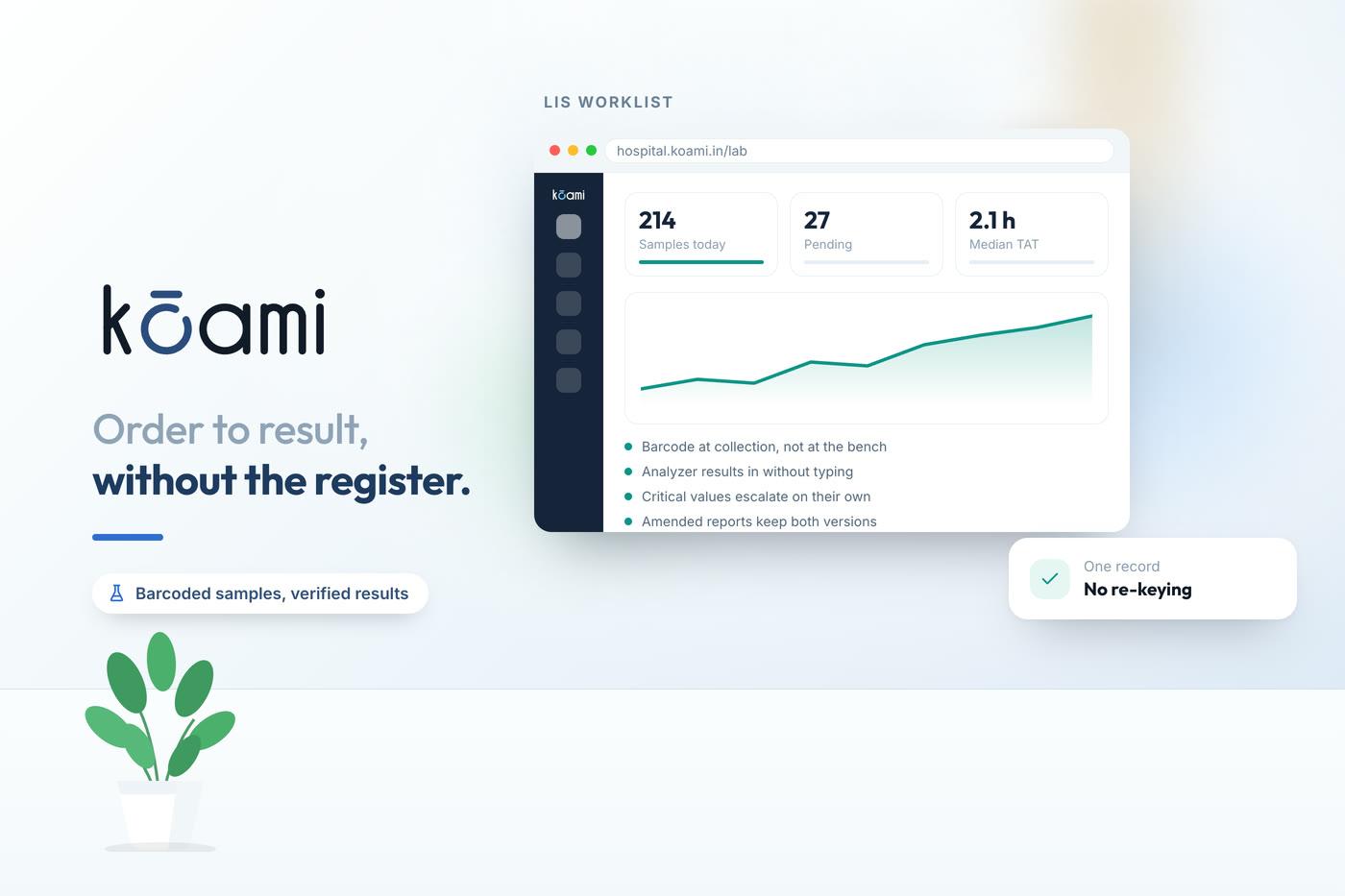
A laboratory information system earns its place between the order and the clinical decision. It should preserve patient identity, label the specimen, manage the analyser work, verify the result, escalate critical values and deliver a signed report while keeping a complete amendment history.
For hospitals and diagnostic centres in Nepal, the buying decision also includes local report formats, collection centres, referral pricing, connectivity, device support and whether the LIS can exchange data with the hospital system rather than creating another patient master.
What should an LIS in Nepal include?
The core workflow is order to acknowledged result, not only result entry.
- Patient and order received directly from HMS or registration
- Barcode labels, specimen type, collector, time and rejection reason
- Accessioning, worklists, routing and priority targets
- Unidirectional and bidirectional analyser interfaces where supported
- Reference ranges by method, age, sex and other relevant context
- Delta checks, panic values, technical review and clinical authorization
- Critical-result notification with named acknowledgement
- Corrected reports with reason, version and audit trail
- Patient, clinician and referring-centre delivery controls
- Turnaround, quality, workload and referral reports
Ask to see a corrected potassium result. The original value must remain visible to authorized reviewers, the new report must be clearly versioned, and the clinician’s acknowledgement must not disappear.
Why do analyser interfaces matter?
They remove transcription and identify exactly where the sample sits.
A unidirectional interface brings results from the analyser to the LIS. A bidirectional interface can also send the patient, test and sample identifier to the instrument, reducing manual selection and mismatch risk. Every interface still needs mapping, validation, monitoring and a reconciliation count; a silent interface failure is more dangerous than a visible error.
Test with the exact analyser model and firmware used by the laboratory. “HL7 supported” is not a completed interface. It is the beginning of a technical conversation.
How should turnaround time be measured?
In segments and at percentiles.
Track order to collection, collection to receipt, receipt to result, result to verification and verification to delivery. The median shows the typical case; the ninetieth percentile shows the delayed tail clinicians remember. Segment by test, priority, shift, collection centre and analyser.
A live worklist should warn before a target is breached. A monthly report can explain last month but cannot rescue today’s sample. Read turnaround time, the metric that runs a lab for the operating model.
What should Nepal diagnostic centres test?
Test collection-centre identity, referral pricing, consolidated reporting and low-connectivity recovery.
A sample collected outside the main lab needs a barcode, collector, collection time, transport status and receipt time. The centre and main lab must see the same patient and order. Referrer and corporate rate cards should price automatically, and approved reports should reach authorized recipients without sharing permanent public links.
Disconnect a collection centre during the demo. Ask how orders are queued, identifiers stay unique, labels are produced and records reconcile when the link returns.
How should an LIS prepare for Nepal interoperability?
Use coded tests, structured results and open standards.
Nepal’s Ministry of Health and Population describes HL7 and FHIR as important tools for interoperable health information, and its HL7 overview specifically names laboratory results among the data exchanged. DICOM matters on the imaging side; APIs and versioned mappings matter across both.
Ask who owns the interface specification, whether the facility can export results with codes and units, and how mappings are tested when the national or local target changes.
Where does Kōami fit?
Kōami Hospital connects orders, billing and the patient record to the laboratory workflow, while Kōami PACS handles the imaging side. The value is one identity and one order rather than matching reports after the fact.
Nepal-specific report, invoice and external exchange requirements need validation with the facility. Bring an actual report, analyser list and collection-centre flow to a technical demo, so the interface scope is explicit before purchase.
Follow Kōami on LinkedIn
Get the next guide on hospital operations, software and compliance in your feed, as soon as it is published.